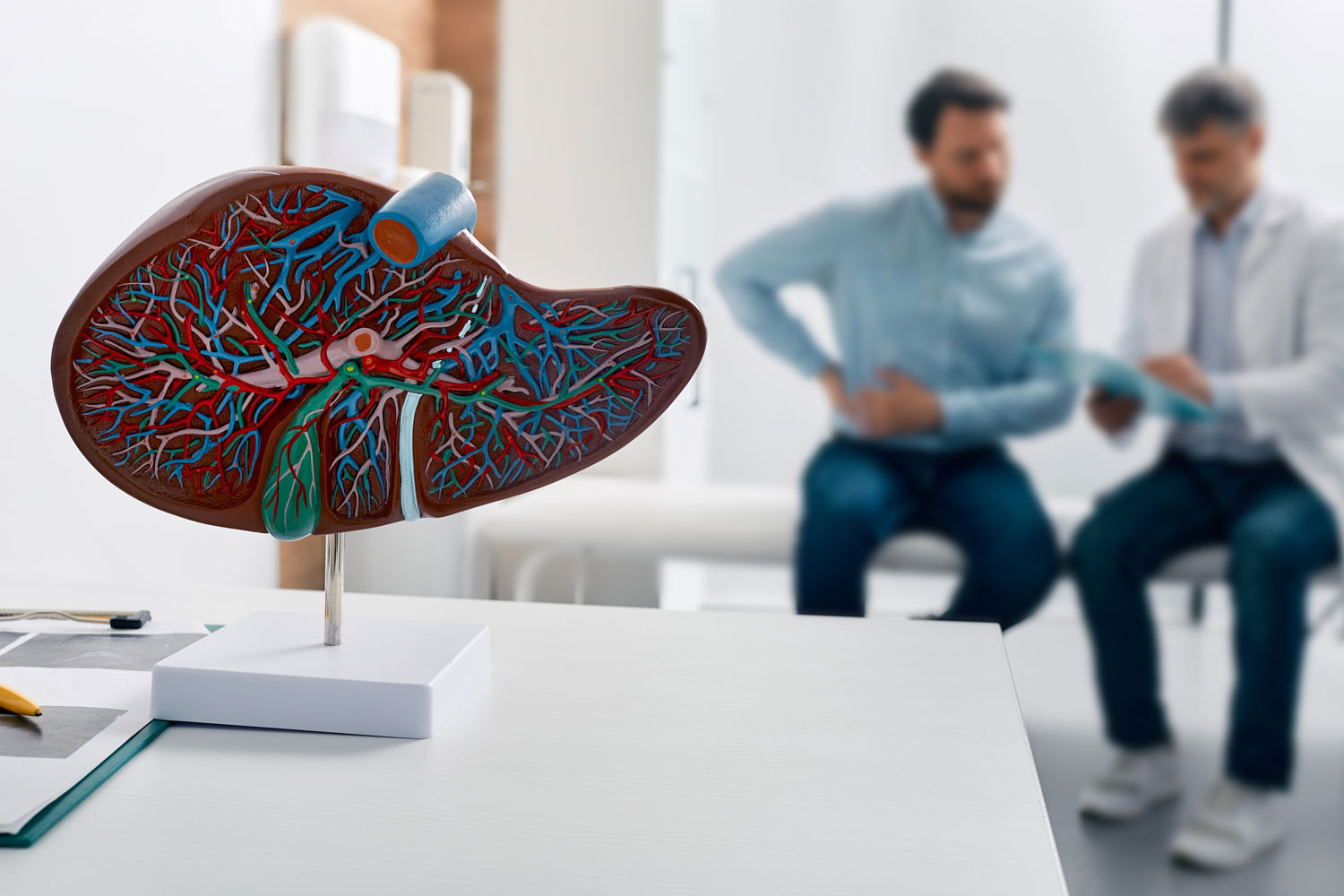
At Independent Physicians Medical Center (IPMC) in Northeast Philadelphia, we offer advanced liver MRI imaging with our experienced team and board-certified radiologists, all in a comfortable outpatient setting that makes the process easier for you.
What Is a Liver MRI?
A liver MRI is a noninvasive imaging test that uses magnetic fields and radio waves to produce highly detailed pictures of your liver, bile ducts, blood vessels, and surrounding structures. Because the liver is composed largely of soft tissue and has a rich blood supply, MRI is ideally suited to reveal problems that may not be clearly visible on X-rays, ultrasounds, or even CT scans.
MRI offers superior contrast between different types of liver tissue, which means it can detect subtle differences between normal tissue, fatty deposits, scar tissue, benign growths, and cancerous tumors. This ability to characterize liver lesions — not just detect them — is one of the key advantages of MRI over other imaging methods. In many cases, a liver MRI can provide enough information to help patients avoid an invasive liver biopsy.
Why Would Your Doctor Order a Liver MRI?
There are many reasons your physician may recommend a liver MRI:
- Abnormal blood test results related to liver function, such as elevated liver enzymes, bilirubin, or tumor markers like AFP (alpha-fetoprotein)
- Investigation of unexplained abdominal pain, particularly in the upper right area, or unexplained jaundice (yellowing of the skin or eyes)
- Detection and characterization of liver tumors — MRI can often distinguish between benign growths (such as hemangiomas, focal nodular hyperplasia, or adenomas) and potentially malignant lesions (such as hepatocellular carcinoma or metastases), frequently without the need for biopsy
- Screening for liver cancer in patients with known risk factors, including chronic hepatitis B or C, cirrhosis, heavy alcohol use, or non-alcoholic steatohepatitis (NASH)
- Evaluation of fatty liver disease (NAFLD or ALD) — MRI can accurately quantify the amount of fat in the liver, which is important for diagnosis and monitoring treatment
- Assessment of liver fibrosis and cirrhosis — specialized MRI techniques like MR elastography can measure liver stiffness, helping to stage fibrosis without a biopsy
- Detection of iron overload (hemochromatosis) — MRI can precisely measure iron concentration in the liver
- Evaluation of bile duct abnormalities — MR cholangiopancreatography (MRCP) uses MRI to visualize the bile ducts and pancreatic ducts in detail, helping to detect stones, strictures, or tumors
- Monitoring the liver before or after a transplant, or evaluating a potential liver donor
- Follow-up on an abnormality initially found on ultrasound or CT scan that needs further characterization
- Monitoring the response to cancer treatment, such as chemotherapy, targeted therapy, or ablation
How to Prepare for Your Liver MRI
Fasting. You will typically need to fast for four to six hours before your liver MRI. This helps reduce bowel motion and ensures the best possible image quality. You may usually take your regular medications with a small amount of water, unless your doctor instructs otherwise.
Contrast dye. Most liver MRIs use gadolinium-based contrast dye, administered through an IV. Some specialized liver MRIs use a liver-specific contrast agent (such as gadoxetate disodium, brand name Eovist), which is taken up by healthy liver cells. This type of contrast provides additional functional information and is particularly useful for detecting small tumors and characterizing ambiguous lesions. Let your doctor know about any allergies or kidney problems before the exam.
Metal safety. Remove all jewelry and metal objects. Inform your care team about any implants, pacemakers, or metal in your body.
Clothing. Wear comfortable, loose-fitting clothing. You’ll likely change into a gown.
Breath-holding. During the scan, you will be asked to hold your breath for short periods (typically 15 to 20 seconds) at several points. This is important because the liver moves when you breathe, and holding your breath produces much sharper images. Practicing breath-holding at home before your appointment can be helpful.
What Happens During the Scan?
At IPMC, you’ll lie on a cushioned table that slides into the MRI machine. A coil may be placed over your abdomen to enhance image quality. The scan typically takes 30 to 60 minutes, depending on the protocol and whether contrast is used.
The machine will make rhythmic tapping and humming sounds, and we’ll provide ear protection. A technologist will communicate with you through an intercom throughout the exam and will give you instructions for breath-holding. Contrast dye, if used, will be injected through your IV partway through the scan, and additional images will be captured at specific time intervals to track how the contrast moves through the liver.
If your doctor orders MR elastography (to assess liver stiffness), a small vibrating pad will be placed on your abdomen over the liver. The vibrations are gentle and painless — the pad sends mechanical waves through the liver that allow the MRI to measure tissue stiffness.
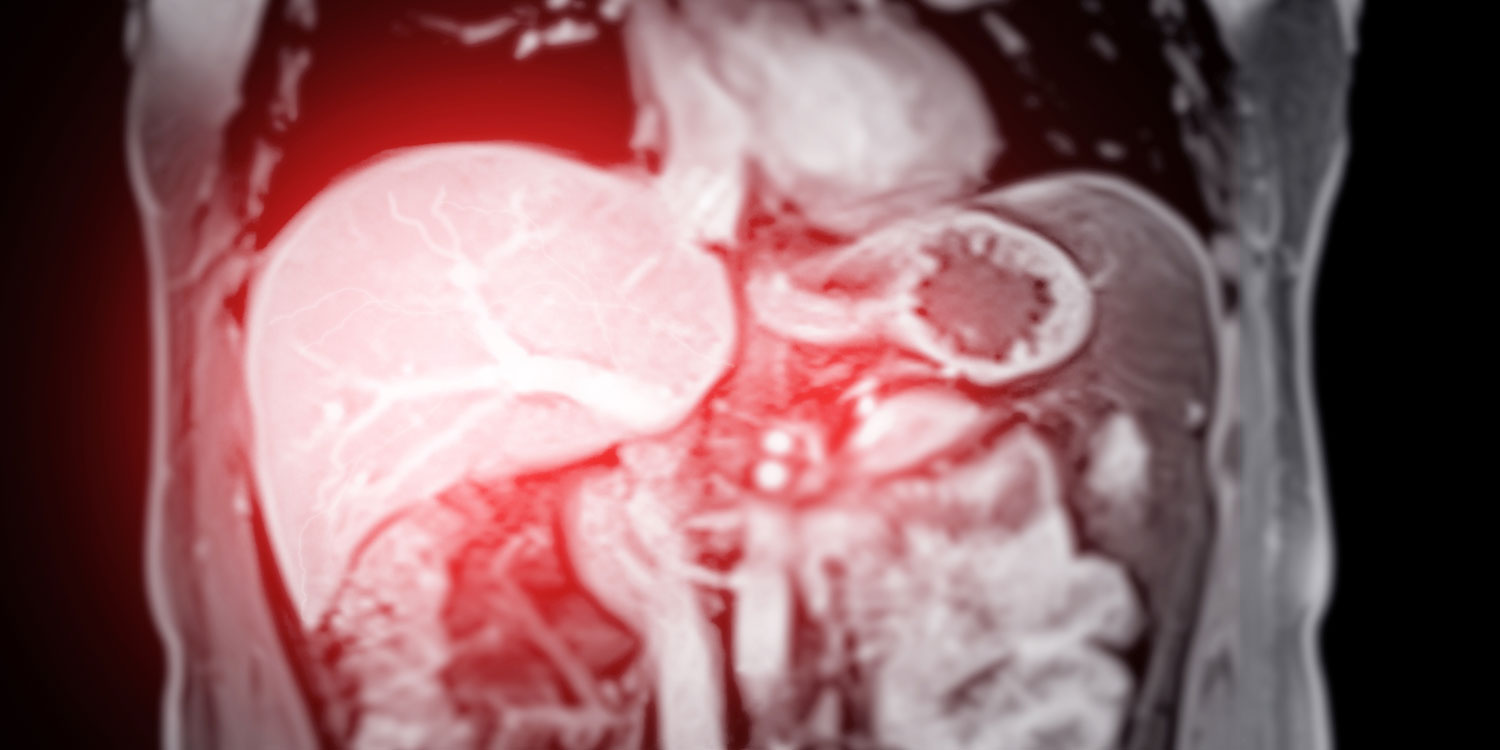
MRI abdomen coronal views are particularly useful for assessing liver, kidneys, and other abdominal organs with precision
Understanding Your Liver MRI Results
A board-certified radiologist at IPMC will analyze your images and prepare a detailed report for your referring doctor. Here’s what the radiologist evaluates:
Liver lesions. The radiologist characterizes any masses or nodules based on their size, shape, signal characteristics, and enhancement patterns after contrast. Many liver lesions can be confidently classified as benign or malignant based on their MRI appearance alone.
Liver fat content. MRI can precisely measure the proton density fat fraction (PDFF), providing an accurate assessment of fatty liver disease and tracking changes over time with treatment or lifestyle modifications.
Liver fibrosis and stiffness. If MR elastography was performed, the radiologist reports liver stiffness values, which correlate with the degree of fibrosis. Higher stiffness suggests more advanced scarring.
Iron content. Abnormally low signal on certain MRI sequences can indicate iron overload, and the degree of signal loss can be used to estimate iron concentration.
Bile ducts. The radiologist evaluates the bile ducts for stones, strictures, dilation, or masses.
Blood vessels. The portal vein, hepatic veins, and hepatic artery are assessed for blood clots, abnormal flow, or other vascular conditions.
Surrounding structures. The spleen, kidneys, pancreas, and abdominal lymph nodes are also visible and evaluated for any abnormalities.
Follow-Up After Your Liver MRI
You can resume your normal activities, diet, and medications immediately after the scan. If contrast dye was used, drinking extra water helps your body clear the contrast more efficiently.
Based on the results, your doctor may recommend additional blood tests, a biopsy of a suspicious lesion, referral to a hepatologist (liver specialist) or oncologist, lifestyle changes for fatty liver disease, continued monitoring with periodic imaging, or specific treatment for any identified condition.
At IPMC, we work to deliver results to your doctor quickly so your care can move forward without unnecessary delays.