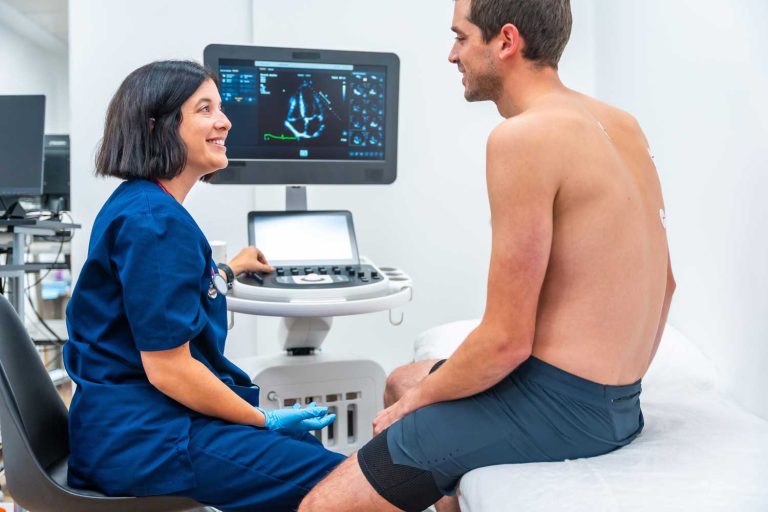
The short answer is yes — a nuclear stress test is safe for the vast majority of elderly patients, and it is one of the most valuable cardiac diagnostic tools available for older adults. In fact, elderly patients often have more to gain from a nuclear stress test than younger ones, because coronary artery disease becomes more prevalent with age and is far more likely to be the underlying cause of symptoms like chest pain, shortness of breath, or fatigue.
That said, the test does require careful planning for older patients — particularly around exercise capacity, medications, and the choice of stress method. This guide addresses the most common concerns elderly patients and their families have, and explains how IPMC’s cardiology team in Northeast Philadelphia tailors the test to each patient’s individual situation.
Why Nuclear Stress Tests Are Particularly Useful for Older Adults
Heart disease is primarily a disease of aging. The prevalence of coronary artery disease rises steeply with each decade, and older patients are more likely to have complex, multi-vessel disease, prior heart attacks, and co-existing conditions that affect how symptoms present. Many elderly patients do not experience the classic crushing chest pain of a heart attack — instead, they may notice only fatigue, shortness of breath, or reduced exercise tolerance that could easily be attributed to normal aging.
A nuclear stress test provides direct visual evidence of blood flow to every region of the heart muscle — at rest and under stress. This allows a cardiologist to identify blocked or narrowed coronary arteries, detect areas of prior heart damage, assess the heart’s overall pumping function, and guide treatment decisions, all without any invasive procedures. For elderly patients being considered for surgery, nuclear stress testing also provides critical pre-operative cardiac risk assessment.
According to the American Heart Association, cardiac stress testing — including nuclear myocardial perfusion imaging — is appropriate across all age groups and is particularly valuable when the pre-test probability of coronary artery disease is intermediate or high, which describes most symptomatic elderly patients.
The Radiation Question: How Much Is the Elderly Patient Exposed To?
Radiation is often the first concern raised by elderly patients and their families. It helps to put the exposure in context.
The radioactive tracer used in a nuclear stress test — most commonly technetium-99m sestamibi — delivers a radiation dose typically in the range of 9 to 12 millisieverts (mSv), depending on the specific protocol. For comparison, the average American receives approximately 3 mSv per year from natural background radiation (cosmic rays, radon, soil, food). A nuclear stress test therefore exposes a patient to roughly the equivalent of 3 to 4 years of natural background radiation — a level all major cardiology and nuclear medicine organizations consider acceptable when the test is clinically indicated.
Crucially, the radiation concern that sometimes discourages younger patients — cumulative lifetime radiation risk from repeated tests — is far less relevant for elderly patients. The diagnostic and prognostic benefit of identifying significant coronary artery disease in an 70- or 80-year-old far outweighs any theoretical long-term radiation risk. Your cardiologist weighs these factors individually for every patient.
Exercise Stress vs. Pharmacological Stress: Which Is Right for Older Adults?
A nuclear stress test can be performed in two ways: with treadmill exercise, or with medication that simulates the cardiovascular effects of exercise. For many elderly patients, the pharmacological (chemical) approach is the safer and more practical choice.
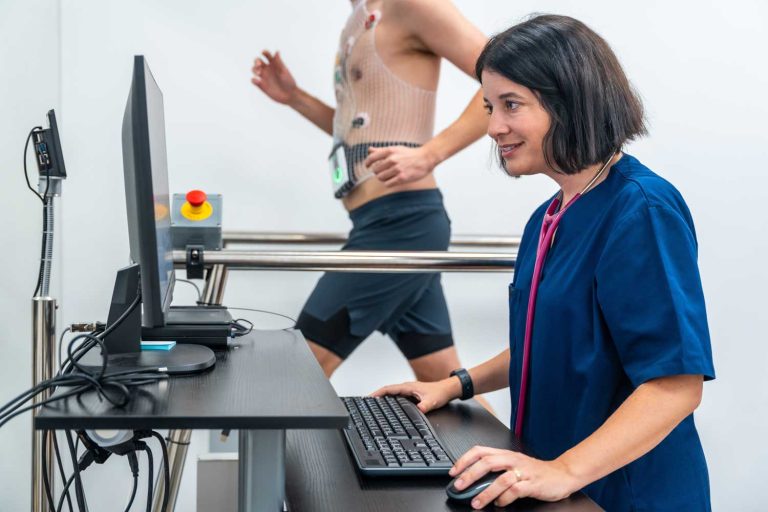
Exercise-based testing requires a patient to walk on a treadmill at increasing speed and incline until reaching 85% of their age-predicted maximum heart rate. While this is entirely achievable for many active elderly patients in their 60s and 70s, it becomes less feasible as mobility, joint problems, balance issues, severe deconditioning, or respiratory limitations become more common. An elderly patient who cannot reach target heart rate produces a non-diagnostic result — which is worse than no test at all, because it provides incomplete information while still requiring the patient’s time and effort.
Pharmacological stress eliminates the treadmill entirely. Medications such as regadenoson (Lexiscan), adenosine, or dipyridamole dilate the coronary arteries — mimicking the effect of vigorous exercise on blood flow — while the patient remains lying comfortably on a table. Dobutamine is used when vasodilators are contraindicated, such as in patients with severe asthma or COPD. The resulting images are diagnostically equivalent to exercise-based nuclear imaging.
For most elderly patients with mobility limitations, joint replacements, severe lung disease, peripheral vascular disease, or severe deconditioning, pharmacological nuclear stress testing is not a lesser alternative — it is the right choice, tailored to their circumstances.
Risks in Elderly Patients: What to Know
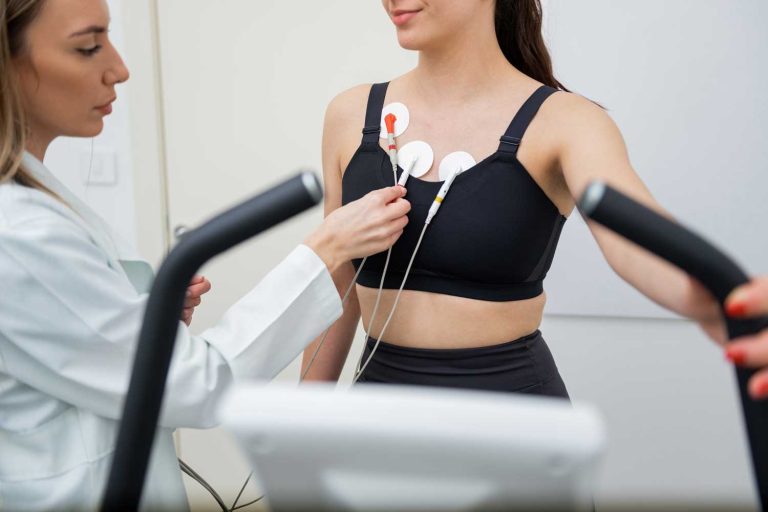
Nuclear stress testing is considered a safe procedure for elderly patients when properly indicated and supervised. The overall risk of a serious complication — including arrhythmia, severe hypotension, or myocardial infarction — is very low: estimated at fewer than 1 in 10,000 appropriately selected patients. Continuous ECG monitoring, blood pressure measurement, and immediate access to emergency equipment throughout the test allow the care team to respond instantly to any concerning change.
That said, elderly patients may have a somewhat higher baseline risk of transient side effects during pharmacological stress, including:
- A warm or flushing sensation, mild chest heaviness, headache, or brief shortness of breath from vasodilator agents — these are temporary and resolve within minutes as the medication clears
- Transient heart rhythm changes, which are monitored continuously and are usually benign
- Blood pressure fluctuations, managed by the care team throughout the procedure
Patients with the following conditions are generally not candidates for nuclear stress testing and require individual evaluation by their cardiologist before proceeding: unstable angina or a very recent heart attack, uncontrolled severe arrhythmias, decompensated heart failure, severe symptomatic aortic stenosis, or significantly uncontrolled blood pressure. Your cardiologist reviews your complete history before ordering the test to ensure it is appropriate and safe.
Special Considerations for Elderly Patients
Several factors specific to older adults require extra attention when preparing for and performing a nuclear stress test.
Medications. Many elderly patients take multiple medications — some of which need to be held before the test. Beta-blockers should generally not be taken on the morning of the test. Caffeine (including decaffeinated coffee, tea, and chocolate) must be avoided for 24 hours, particularly for pharmacological tests using vasodilator agents. Patients on theophylline-containing medications should alert their care team. For the complete medication guidance, see IPMC’s nuclear stress test preparation page and our guide to what not to do before a stress test.
Diabetes management. Elderly patients with diabetes who are asked to fast or limit food before the test need a clear plan for insulin and medication timing. Hypoglycemia during or after testing is a real risk. Always coordinate with your diabetes care provider before the appointment.
Kidney function. The radioactive tracer is cleared by the kidneys. Patients with significantly reduced kidney function (CKD stage 4–5) may require a modified hydration plan. Your care team will review your kidney function before the test.
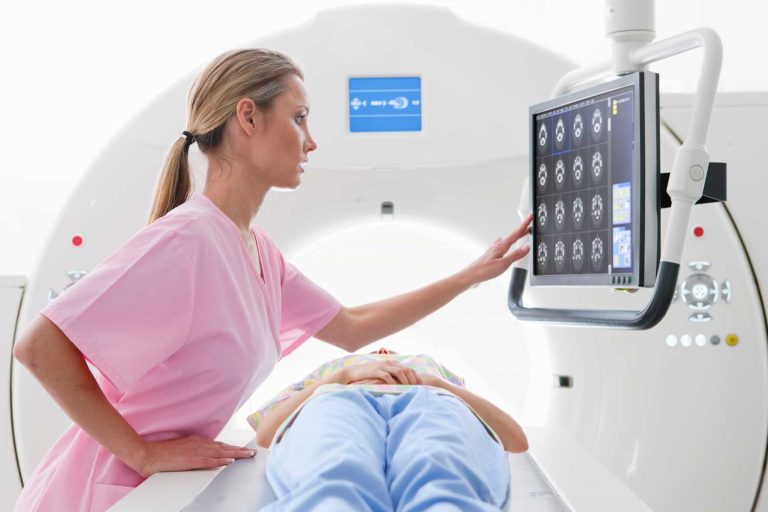
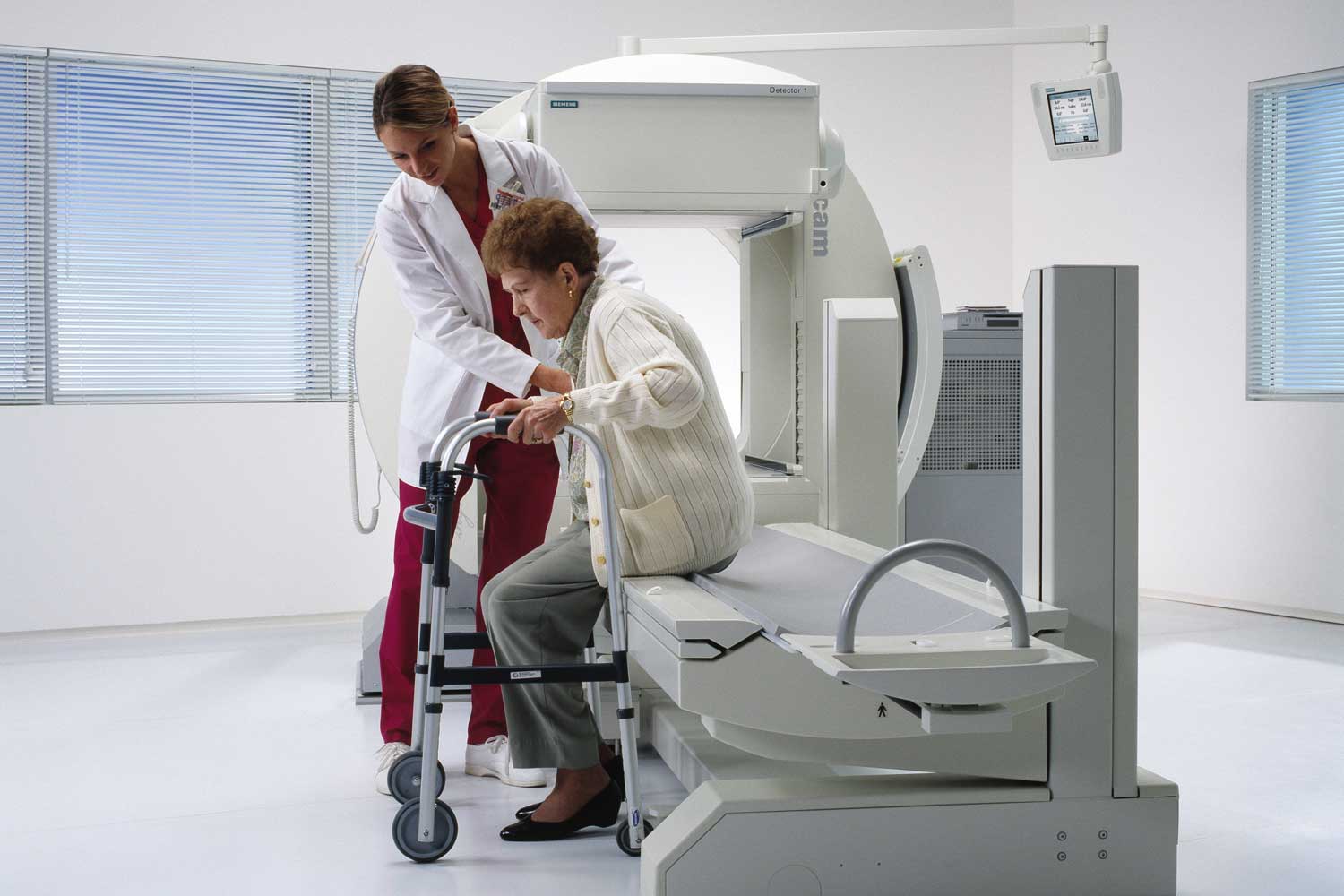
Mobility and comfort. IPMC uses the Siemens E.Cam — a gamma camera with an open design that accommodates patients in wheelchairs, on stretchers, and those who struggle with enclosed spaces. Lying still under the camera for 15 to 20 minutes can be uncomfortable for patients with arthritis or back pain; let your care team know in advance so positioning accommodations can be arranged.
Cognitive concerns. Patients with early dementia or significant cognitive impairment may have difficulty following instructions during the imaging phase. If this is a concern, discuss it with your cardiologist in advance — a family member or caregiver may be permitted to accompany the patient into the imaging room in some cases.
What Does the Test Show — and How Are Results Used in Older Adults?
The nuclear stress test produces two sets of images that a board-certified cardiologist compares directly: resting blood flow and blood flow under peak stress. A region of the heart that shows reduced tracer uptake on stress images but normal uptake at rest indicates reversible ischemia — a living area of heart muscle not receiving enough blood during exertion, usually due to a significant coronary artery blockage. An area that shows reduced uptake on both stress and rest images typically indicates a prior heart attack — fixed scarring.
In elderly patients, how results are used depends heavily on age, overall health, functional status, and goals of care. A 65-year-old with a significantly abnormal nuclear stress test may be an excellent candidate for coronary angiography and stenting. An 85-year-old with the same result may be better served by optimizing medical therapy rather than pursuing invasive procedures — the risk-benefit calculation changes with age and comorbidities.
This is precisely why stress test results are never interpreted in isolation. Your cardiologist considers your complete clinical picture. For more on how age shapes results interpretation, see our guide to stress test results by age.
After the Test: What Elderly Patients Should Know
There is no recovery time after a nuclear stress test. Most patients can drive themselves home (assuming no sedation was used) and resume their normal routine the same day. Drinking extra water is encouraged to help the kidneys clear the radioactive tracer. For the first few hours after the test, minimize prolonged close contact with infants, young children, and pregnant women as a precaution — by the following day, no restrictions apply for most tracers. Our full aftercare guide covers all of this: nuclear stress test precautions after the test.
Results are reviewed by a board-certified cardiologist and typically available within a few days, sent directly to your referring physician. Your doctor will explain the findings and discuss any recommended next steps — which may range from reassurance and continued monitoring to medication adjustment, a stress echocardiogram for additional detail, or referral for coronary angiography.
Nuclear Medicine at IPMC
Why Choose Nuclear Stress Testing for Elderly Patients at IPMC in Philadelphia
Advanced Nuclear Medicine Technology
High-quality imaging helps your physician see what’s happening inside your body clearly.
Convenient Location and Flexible Hours
Easily accessible with onsite parking. Open Monday–Friday from 8AM to 8PM to fit your schedule.
Comfortable Outpatient Experience
Fast Appointments & Quick Results
Schedule a Nuclear Stress Test at IPMC in Philadelphia
If your doctor has recommended a nuclear stress test in Philadelphia — for you or an elderly family member — IPMC provides expert, patient-centered cardiac imaging in a comfortable outpatient setting, with results sent directly to your physician.
- Call 215-464-3300 to schedule your appointment.
- 9908 E. Roosevelt Blvd., Philadelphia, PA 19115
At IPMC, we believe nuclear imaging should be personal, efficient, and coordinated with your overall care plan — helping you and your doctor make confident decisions about your heart and vascular health.