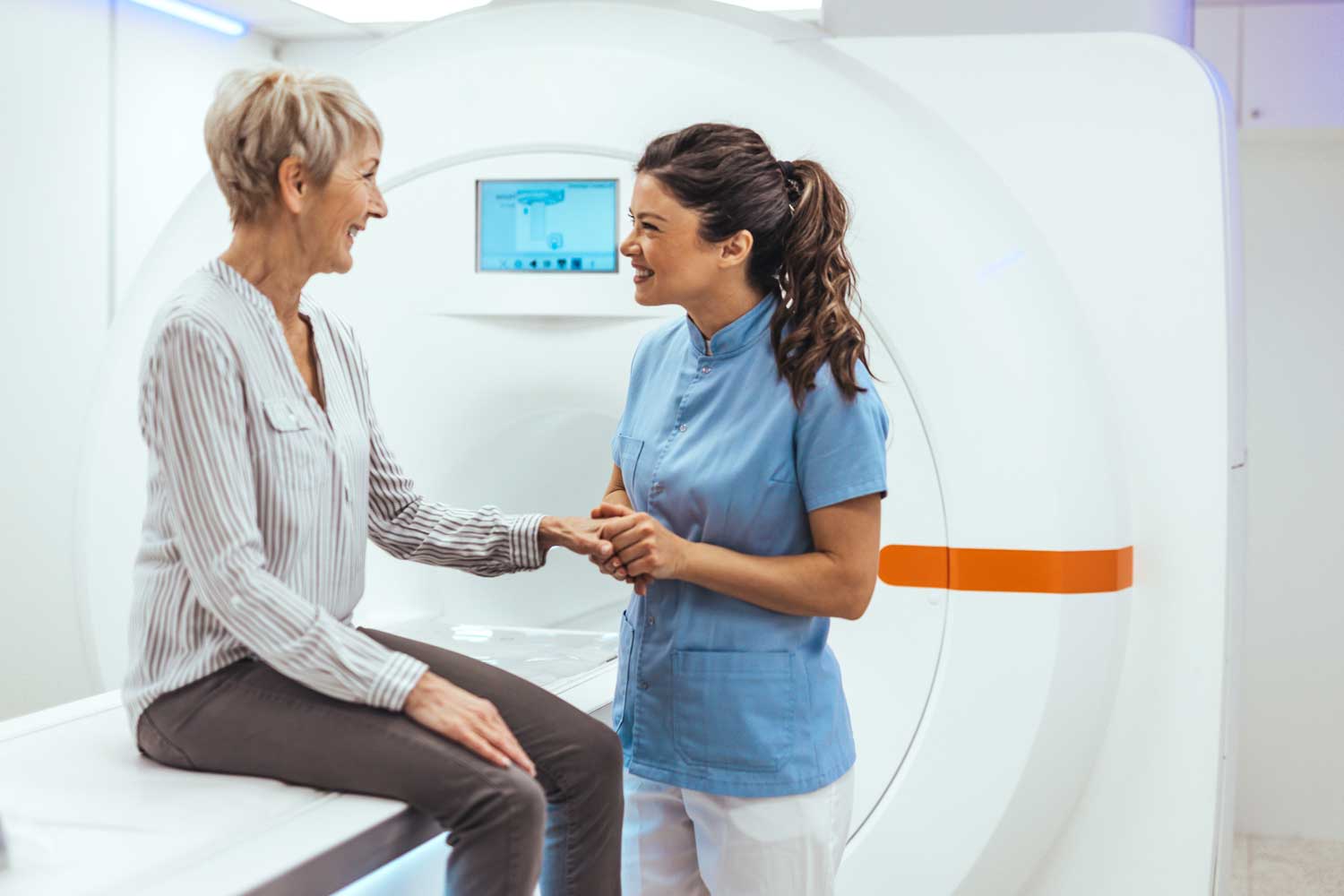
When your doctor recommends advanced imaging, one of the most powerful tools available is an MRI scan — short for magnetic resonance imaging. This test produces extraordinarily detailed pictures of the inside of your body, helping your doctor detect, diagnose, and monitor a wide range of conditions with precision and confidence — all without using radiation.
At Independent Physicians Medical Center (IPMC) in Northeast Philadelphia, we offer state-of-the-art MRI scanning in a comfortable outpatient setting. If you’re searching for an MRI scan in Philadelphia, our experienced team provides high-quality imaging without the stress of a hospital visit.
What Is an MRI Scan and How Does It Work?
An MRI scan is a noninvasive medical imaging test that uses a strong magnetic field, radio waves, and a computer to create highly detailed cross-sectional images of your internal anatomy — including organs, soft tissues, blood vessels, and bones.
Unlike X-rays or CT scans, MRI does not use ionizing radiation — making it safer for repeated imaging and for patients who need to avoid radiation exposure, including children and pregnant women in many situations.
Here’s what happens during the scan: the magnetic field temporarily aligns hydrogen atoms naturally present in your body’s water molecules. When radio waves are directed at these aligned atoms and then switched off, the atoms emit signals as they return to their normal positions. A computer captures and processes these signals to construct detailed cross-sectional images from multiple angles. Different types of tissues — muscle, fat, organs, and tumors — respond differently to the magnetic field, allowing radiologists to distinguish between normal and abnormal structures with remarkable precision.
According to RadiologyInfo.org (published by the American College of Radiology and the Radiological Society of North America), MRI is one of the safest and most informative imaging tests available, with no known harmful effects from the magnetic field or radio waves used at diagnostic levels.
What Can an MRI Scan Diagnose?
MRI is particularly powerful for visualizing soft tissues that other imaging tests may not capture well. Doctors order MRI scans to investigate and monitor a wide range of conditions:
- Brain and spine: Tumors, stroke, multiple sclerosis, herniated discs, spinal cord compression, and nerve damage. See our cervical MRI and lumbar MRI guides for more detail.
- Joints, muscles, and tendons: ACL and meniscus tears, rotator cuff injuries, cartilage damage, and arthritis. Our knee MRI and shoulder MRI pages explain these in detail.
- Abdominal and pelvic organs: Liver disease, kidney masses, pancreatic conditions, uterine fibroids, ovarian cysts, and prostate abnormalities. See our abdominal MRI and pelvic MRI guides.
- Heart and blood vessels: Cardiac muscle disease, aortic aneurysms, and vascular abnormalities evaluated with cardiac MRI or MR angiography.
- Breast tissue: Cancer staging, screening in high-risk women, and implant evaluation. See our breast MRI guide.
- Cancer staging and treatment monitoring: Evaluating tumor size, spread, and response to chemotherapy or radiation across many organ systems.
- Infections and inflammation: Identifying abscesses, osteomyelitis, and inflammatory conditions in bone and soft tissue.
Because MRI provides such clear soft tissue detail, it is often the definitive test when symptoms are unclear, or when other imaging — such as an X-ray or ultrasound — has been inconclusive.
MRI vs. CT Scan vs. X-Ray: What’s the Difference?
| MRI scan | CT scan | X-ray | |
|---|---|---|---|
| How it works | Magnetic field + radio waves | X-rays from multiple angles, reconstructed by computer | Single-angle X-ray image |
| Radiation | None | Low–moderate | Very low |
| Best for | Soft tissue — brain, spine, joints, organs, nerves | Bone, chest, lungs, trauma, bleeding, cancer staging | Bone fractures, chest overview, foreign objects |
| Soft tissue detail | Excellent | Good | Limited |
| Scan time | 20–60 min | 5–15 min | Seconds to 5 min |
| Contrast dye | Sometimes (gadolinium) | Often (iodine-based) | Not typically used |
| Safe in pregnancy | Usually, case by case | Avoided if possible | Low dose, shielded |
| Noise during scan | Loud tapping / knocking | Quiet hum | Silent |
| Recovery time | None | None | None |
| Claustrophobia concern | Moderate — tube scanner | Low — wider, shorter tunnel | None |
| Cost (general) | Highest | Moderate | Lowest |
| Common uses | Brain tumors, herniated discs, ACL tears, liver lesions, prostate cancer | Pulmonary embolism, stroke, abdominal pain, trauma, kidney stones | Broken bones, pneumonia, scoliosis, dental imaging |
For a deeper comparison, see our article: CT Scan vs. MRI: What’s the Difference and Which One Is Right for You?
How to Prepare for Your MRI Scan
Our full MRI preparation guide covers exam-specific instructions. Key general points:
- Metal safety: Remove all jewelry, piercings, and metal accessories before the scan. Inform your care team about any metal implants — pacemakers, cochlear implants, surgical hardware, or joint replacements — so their MRI-compatibility can be verified.
- Eating and medications: For most MRI scans, you can eat, drink, and take medications normally. Specific exams (such as abdominal MRI) may require fasting — your scheduling team will advise.
- Contrast dye: Some MRIs use a gadolinium-based contrast agent injected through an IV to enhance image detail. Let your doctor know if you have kidney problems or a history of allergic reactions to contrast. See our guide to MRI with contrast.
- Claustrophobia: If enclosed spaces cause anxiety, tell your doctor in advance — accommodations or mild sedation may be available. Note that for extremity scans (knee, shoulder, wrist), your head often stays outside the machine.
- Clothing: Wear comfortable, loose-fitting clothes without metal snaps or zippers. You may be asked to change into a gown.
What Happens During an MRI Scan at IPMC?
- Check-in and screening. Our team reviews a safety questionnaire about metal implants and medical history before you enter the scan room.
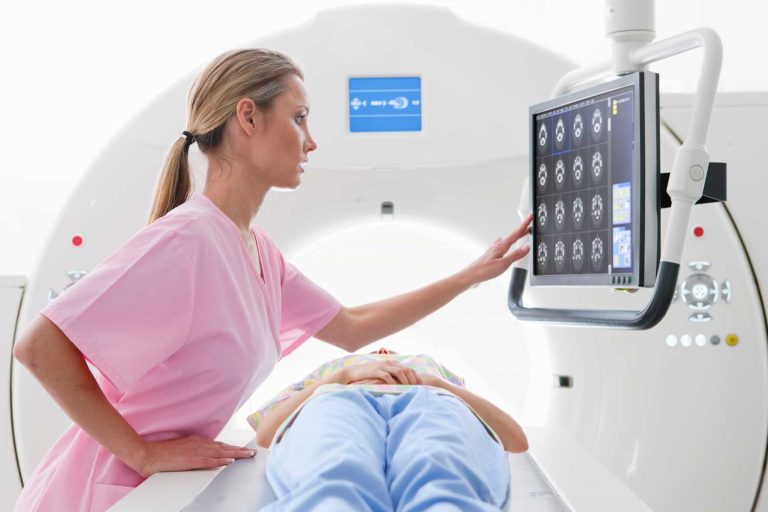
- Positioning. You’ll lie on a cushioned, motorized table. Coils (specialized antennas) may be placed around the body area being scanned to improve image quality.
- Inside the scanner. The table slides into the MRI machine — a large, tube-shaped unit. You’ll be able to communicate with the technologist through an intercom throughout the entire scan.
- The scan. The machine produces loud tapping, clicking, and humming sounds as it captures images. Ear protection — earplugs or headphones — is provided. Many patients listen to music during the scan. You’ll need to lie as still as possible; the technologist may ask you to hold your breath briefly for certain sequences.
- Contrast (if needed). If contrast dye is part of your exam, it is injected through a small IV partway through — and additional images are captured afterward.
- Duration. Most MRI exams take 20 to 60 minutes. Complex protocols may take slightly longer.
There is no recovery time. You can drive, eat, and return to all normal activities immediately after your scan.
Open MRI vs. Closed MRI: Which Is Right for You?
Closed MRI (the traditional tube-shaped scanner) uses a stronger magnet, producing higher-resolution images — making it the preferred choice for most diagnostic exams.
Open MRI systems have more open sides and can be more comfortable for patients with claustrophobia or larger body frames, though they typically use a weaker magnetic field and may produce lower-resolution images.
For extremity studies (knee, shoulder, wrist, ankle), only the relevant body part enters the scanner — your head and most of your body remain outside, which most patients find much more comfortable.
After Your MRI: Results and Next Steps
After your scan, a board-certified radiologist at IPMC reviews every image and prepares a detailed report for your referring physician. Results are typically available within one to two business days and sent directly to your doctor, who will contact you to discuss findings and any recommended next steps.
Depending on what the MRI reveals, your doctor may recommend additional imaging (such as an ultrasound or CT scan), a biopsy, specialist referral, or a treatment plan based on the findings.
MRI at IPMC
Why Choose IPMC for Your MRI Scan in Philadelphia?
Convenient Location and Flexible Hours
Located at 9908 E. Roosevelt Blvd. in Northeast Philadelphia with onsite parking. Open Monday–Friday, 8AM–8PM — without hospital wait times. We accept most major insurance plans.
Advanced MRI Technology
Our imaging equipment delivers the high-resolution detail your doctor needs to make accurate diagnoses and guide treatment. We offer a full range of MRI studies — from brain and spine to cardiac, abdominal, and musculoskeletal imaging.
Comfortable Outpatient Setting
Fast Appointments & Quick Results
Schedule Your MRI Scan at IPMC in Philadelphia
If your physician has recommended an MRI, Independent Physicians Medical Center provides reliable and convenient imaging close to home in Northeast Philadelphia.
- Call 215-464-3300 to book your appointment.
- 9908 E. Roosevelt Blvd., Philadelphia, PA 19115
- Monday–Friday, 8AM–8PM
At IPMC, high-quality imaging and compassionate care go hand-in-hand—helping you and your doctor get the answers you need with confidence.