After a cardiac stress test, the first question most patients ask is: “Were my results normal?” The honest answer is that stress test results are not a simple pass/fail — they are interpreted in the full context of your age, fitness level, symptoms, medical history, and risk factors. Age is one of the most important variables, because it directly determines what target heart rate you’re expected to reach and sets the baseline against which your exercise capacity is measured.
At IPMC in Northeast Philadelphia, our cardiology team helps every patient understand their results clearly and know exactly what comes next. This guide explains how age shapes your stress test, what a normal result looks like, what an abnormal result may indicate, and when further testing is needed.
How Age Affects Your Target Heart Rate
During an exercise stress test, your cardiologist is working toward a specific goal: getting your heart rate to at least 85% of your age-predicted maximum heart rate. That threshold is the point at which the test becomes diagnostically meaningful — below it, the test may not reliably detect a blocked artery.
Your predicted maximum heart rate is calculated with a simple formula: 220 minus your age. Your target heart rate (85% of maximum) is therefore also age-dependent. As you get older, both numbers decline — and that is completely normal. A 70-year-old who reaches 128 beats per minute during a stress test is working just as hard, relatively speaking, as a 30-year-old who hits 161.
The table below shows target heart rates by age group. If you cannot reach target heart rate due to physical limitations, a chemical stress test using medication is used instead.
| Age | Predicted max heart rate (220 − age) | Target heart rate (85% of max) |
|---|---|---|
| 30 | 190 bpm | 162 bpm |
| 35 | 185 bpm | 157 bpm |
| 40 | 180 bpm | 153 bpm |
| 45 | 175 bpm | 149 bpm |
| 50 | 170 bpm | 145 bpm |
| 55 | 165 bpm | 140 bpm |
| 60 | 160 bpm | 136 bpm |
| 65 | 155 bpm | 132 bpm |
| 70 | 150 bpm | 128 bpm |
| 75 | 145 bpm | 123 bpm |
| 80 | 140 bpm | 119 bpm |
Note: The 220 − age formula is a widely used estimate. Individual maximum heart rates vary, and your cardiologist uses your actual achieved heart rate alongside all other test parameters when interpreting your results.
What a Normal Stress Test Result Looks Like
A normal (negative) stress test result means that the cardiologist found no significant evidence of coronary artery disease or dangerous cardiac abnormalities during the test. Specifically, a normal result typically means all of the following:
- You reached or came close to your age-predicted target heart rate (at least 85% of maximum)
- Your ECG showed no significant ST-segment depression or elevation during or after exercise — indicating that every part of your heart was receiving adequate blood flow throughout
- Your blood pressure rose appropriately with exercise (a normal response) and did not drop
- Your heart rate recovered normally after exercise — specifically, it dropped by more than 12 beats per minute in the first minute after stopping exercise (inadequate heart rate recovery is itself a risk marker)
- You did not develop chest pain, severe shortness of breath, or dizziness that correlated with ECG or imaging changes
- If echocardiography or nuclear imaging was performed, all areas of the heart muscle received adequate blood flow and contracted normally under stress
A normal stress test result is reassuring — it significantly reduces the likelihood of significant coronary artery disease as the cause of your symptoms. However, it does not guarantee complete freedom from future cardiac events. Coronary plaques that are not yet causing flow limitation can still rupture and cause a heart attack, and a normal stress test does not detect all forms of heart disease.
What an Abnormal Stress Test Result May Indicate
An abnormal (positive) stress test result means the cardiologist identified one or more findings that suggest the heart was not receiving adequate blood flow during exercise — or that something else concerning occurred during the test. Abnormal findings may include:
ST-segment changes on the ECG. Depression of the ST segment (the portion of the heart’s electrical signal between contractions) during or shortly after exercise is the classic marker of myocardial ischemia — insufficient blood flow to the heart muscle. The degree, distribution, and timing of ST depression all influence how concerning the finding is. ST elevation during exercise is rarer and more alarming.
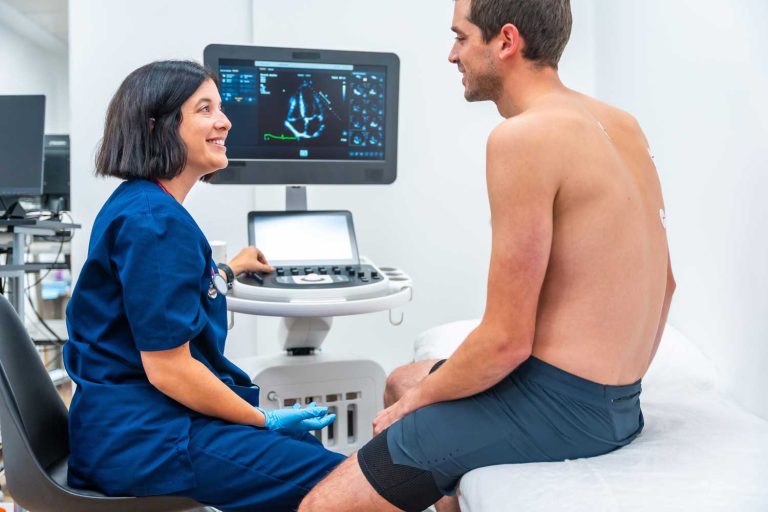
Wall motion abnormalities (on stress echocardiogram). One or more segments of the heart muscle that stopped contracting normally — or weakened — during exercise indicate that the coronary artery supplying that territory cannot meet the increased demand. This is a direct, visual sign of ischemia.
Perfusion defects (on nuclear stress test). Areas of the heart that did not receive the radioactive tracer normally during stress — appearing as “cold spots” — indicate reduced blood flow. If the defect is present on stress images but not on rest images, it suggests reversible ischemia (a live area of heart muscle with inadequate blood supply). If the defect is present on both, it may represent scarring from a prior heart attack.
Abnormal blood pressure response. A drop in systolic blood pressure during exercise (rather than a rise) is a serious finding that may indicate severe coronary artery disease or impaired heart function. An exaggerated rise to systolic pressures above 210–220 mmHg may indicate exercise-induced hypertension.
Abnormal heart rate recovery. If your heart rate drops by fewer than 12 beats per minute in the first minute after stopping exercise, this is associated with increased cardiovascular risk, even in the absence of other abnormalities.
Significant arrhythmias. Some arrhythmias triggered by exercise — such as sustained ventricular tachycardia — require prompt evaluation. Others, such as occasional isolated extra beats, may be benign.
Symptoms with test correlates. Chest pain, pressure, or significant shortness of breath during exercise that coincides with ECG or imaging changes strengthens the significance of those findings.
How Age Changes the Context of Abnormal Results
The probability of an abnormal stress test rises with age — simply because coronary artery disease becomes more prevalent as decades pass and cholesterol and calcium accumulate in arterial walls. Research in athletes found that roughly 5% of those aged 35–60 had abnormal stress test results, compared to about 8.5% in those over 60. In the general population with cardiac risk factors, rates are considerably higher.
Age also shapes what happens after an abnormal result. A 45-year-old with a strongly abnormal stress test and a 50-year cardiovascular horizon ahead may be a compelling candidate for coronary angiography and intervention. An 85-year-old with the same result may have a different risk-benefit calculation — one where the risks of invasive procedures may outweigh what they would add to quality of life. Your cardiologist integrates age, overall health, symptoms, and individual goals when recommending next steps.
Exercise Capacity, METs, and What They Mean for Your Age
Beyond heart rate and ECG findings, your cardiologist also evaluates your exercise capacity — how hard you could work before reaching target heart rate or developing symptoms. This is measured in METs (metabolic equivalents), where 1 MET is the energy your body uses at rest.
Exercise capacity is one of the strongest independent predictors of cardiovascular mortality and overall longevity. Patients who can achieve 10 METs or more on a treadmill have a very low risk of cardiac death regardless of ECG findings. Achieving fewer than 5 METs indicates poor functional capacity and significantly higher risk.
Expected MET levels decline with age and vary by sex and baseline fitness. A 45-year-old in good health is generally expected to achieve 10–12 METs; a sedentary 70-year-old may reach 5–7. These norms inform whether your exercise capacity is appropriate for your age and whether cardiac rehabilitation or structured exercise training would be beneficial.
The Duke Treadmill Score
For exercise stress tests, cardiologists often calculate the Duke Treadmill Score — a validated formula that combines exercise time, ST-segment changes, and symptoms to estimate five-year survival and the likelihood of significant coronary artery disease. The score = (exercise time in minutes) − (5 × ST deviation in mm) − (4 × angina index, where 0 = none, 1 = non-limiting, 2 = exercise-limiting).
A score of +5 or higher indicates low risk (approximately 99% five-year survival). A score of −11 or lower indicates high risk and strongly suggests the need for coronary angiography. Scores between −10 and +4 are intermediate risk, where the decision for further testing depends on clinical context.
Your cardiologist will include the Duke Treadmill Score and its implications in their interpretation if it is applicable to your test type.
Equivocal Results: When the Test Is Inconclusive
Not every stress test comes back clearly normal or clearly abnormal. An equivocal result means there were some changes that cannot be definitively classified — perhaps borderline ST changes without symptoms, or a mildly positive finding in a patient with a low pre-test probability of disease. Equivocal results are common, particularly in women (in whom ECG stress testing has lower specificity) and in patients who could not reach target heart rate.
When a result is equivocal, your cardiologist may recommend:
- A repeat test with imaging added (such as a stress echocardiogram or nuclear stress test) if your original test was ECG-only
- A pharmacological stress test if target heart rate was not achieved during exercise
- Coronary CT angiography (CCTA) for anatomical assessment of the coronary arteries
- Clinical monitoring with reassessment if pre-test probability of disease is low
What Happens After an Abnormal Stress Test?
An abnormal result is not a diagnosis — it is a signal that warrants further evaluation. Not all abnormal results require immediate intervention, and many patients with mildly positive tests do very well with medical management alone.
Depending on the degree of abnormality, your age, and your overall clinical picture, your cardiologist may recommend:
- Lifestyle modifications: Diet changes, smoking cessation, structured exercise, and weight loss — often appropriate for mild findings in low-risk patients
- Medication optimization: Starting or adjusting statins, antihypertensives, antiplatelet agents, or other cardiac medications
- Repeat imaging: A stress echocardiogram or nuclear stress test for more detailed functional information
- Coronary angiography (cardiac catheterization): The definitive test for diagnosing and treating coronary artery blockages — recommended when the stress test finding is significantly abnormal or high-risk
- Continued monitoring: For borderline or low-risk findings, a repeat stress test in 1–2 years may be the most appropriate next step
Results are always sent promptly to your referring physician, who will discuss findings and recommendations with you directly. At IPMC, our cardiologists are available to answer your questions and guide next steps. Meet our cardiologists.
Nuclear Medicine at IPMC
Cardiac Stress Testing at IPMC in Philadelphia
Advanced Nuclear Medicine Technology
High-quality imaging helps your physician see what’s happening inside your body clearly.
Convenient Location and Flexible Hours
Easily accessible with onsite parking. Open Monday–Friday from 8AM to 8PM to fit your schedule.
Comfortable Outpatient Experience
Fast Appointments & Quick Results
Schedule Your Stress Test at IPMC in Philadelphia
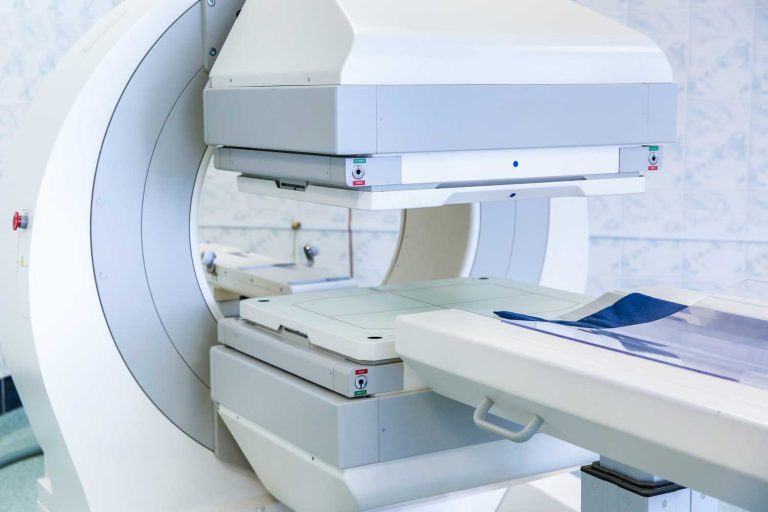
If your physician has recommended a nuclear medicine imaging test — such as a nuclear stress test or another study to evaluate heart function and blood flow — Independent Physicians Medical Center is here to provide reliable, advanced nuclear imaging close to home in Northeast Philadelphia. Nuclear medicine uses a small, safe amount of radioactive tracer to help your doctor see how organs and tissues are functioning, including how blood flows through your heart.
- Call 215-464-3300 to schedule your appointment.
- 9908 E. Roosevelt Blvd., Philadelphia, PA 19115
At IPMC, we believe nuclear imaging should be personal, efficient, and coordinated with your overall care plan — helping you and your doctor make confident decisions about your heart and vascular health.