At Independent Physicians Medical Center (IPMC) in Northeast Philadelphia, we offer advanced MRI imaging including MRCP to help your doctor evaluate gallbladder and bile duct issues accurately and comfortably.
What Is a Gallbladder MRI and MRCP?
A gallbladder MRI uses magnetic fields and radio waves to produce detailed images of your gallbladder, bile ducts, liver, and pancreas. When the MRI protocol includes MRCP, it creates images specifically of the biliary and pancreatic duct systems — similar to what an invasive procedure called ERCP (endoscopic retrograde cholangiopancreatography) would show, but without any scope, sedation, or incisions.
MRCP takes advantage of the fact that bile and pancreatic fluid appear very bright on certain MRI sequences, allowing the ducts to be visualized in extraordinary detail. This makes it ideal for detecting stones, strictures, blockages, and abnormal anatomy. The test provides excellent soft tissue contrast that is superior to CT scan for evaluating many biliary conditions.
Why Would Your Doctor Order a Gallbladder MRI?
Your physician may recommend a gallbladder MRI or MRCP for:
- Evaluation of suspected gallstones, especially stones that may have migrated into the bile ducts (choledocholithiasis)
- Investigation of unexplained upper abdominal pain, especially pain in the right upper area that occurs after eating
- Assessment of bile duct blockages, narrowing (strictures), or dilation
- Evaluation of jaundice (yellowing of the skin or eyes) when the cause is unclear
- Diagnosis of cholecystitis (inflammation of the gallbladder) or cholangitis (infection of the bile ducts)
- Investigation of tumors or masses in the gallbladder, bile ducts, or head of the pancreas — including cholangiocarcinoma (bile duct cancer) and gallbladder cancer
- Evaluation of post-cholecystectomy (gallbladder removal) complications, such as retained stones or bile leaks
- Mapping the anatomy of the biliary system before surgical or endoscopic procedures
- Follow-up on abnormalities detected by ultrasound or CT scan
- Evaluation of congenital bile duct abnormalities, such as choledochal cysts
- Assessment of pancreatitis and pancreatic duct abnormalities
How to Prepare and What to Expect
You will likely be asked to fast for about four to six hours before your gallbladder MRI. Fasting ensures that the gallbladder is distended with bile, making it easier to visualize, and reduces motion in the bowel.
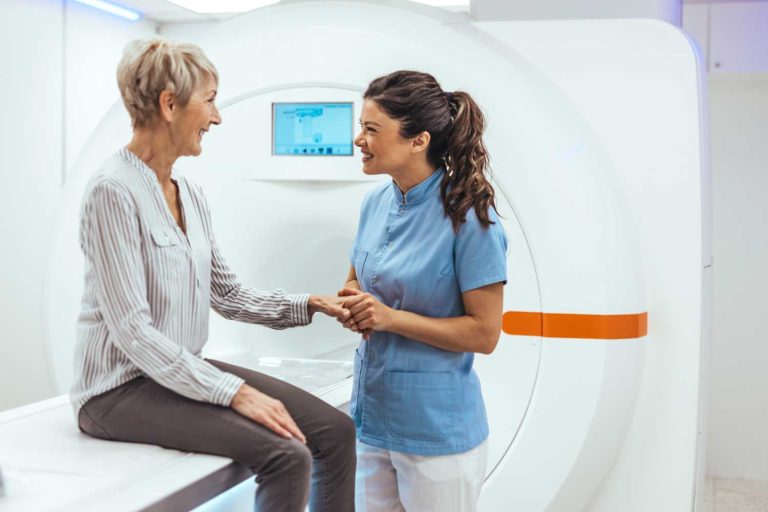
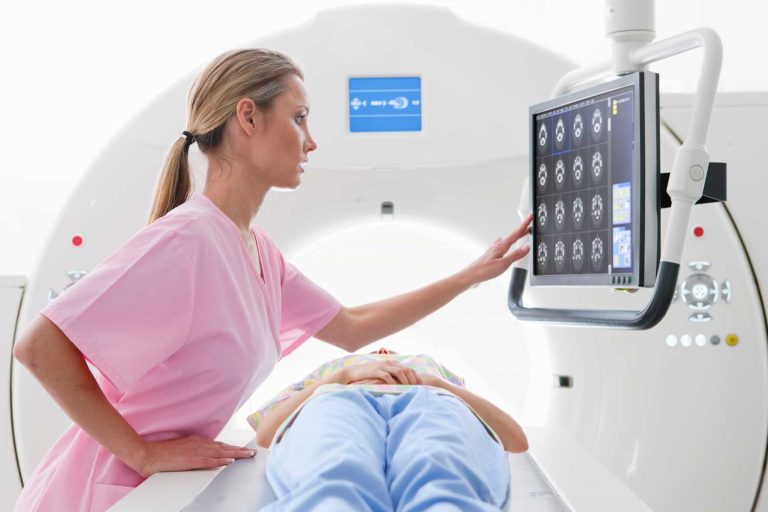
During the scan, you’ll lie on a padded table that slides into the MRI machine. A coil is placed over your abdomen. The scan typically takes 30 to 60 minutes. You may be asked to hold your breath for short periods to minimize motion. Contrast dye may be used in some cases. Ear protection is provided, and a technologist will communicate with you throughout.
The procedure is painless, and there is no recovery time afterward.

Gallbladder MRI scan showing gallbladder polyp differentiation
After Your Gallbladder MRI
You can eat, drink, and return to normal activities immediately. A board-certified radiologist will analyze the images and send a detailed report to your doctor, who will review the results and discuss treatment options, which may include medication, dietary changes, endoscopic procedures, or surgery depending on the findings.