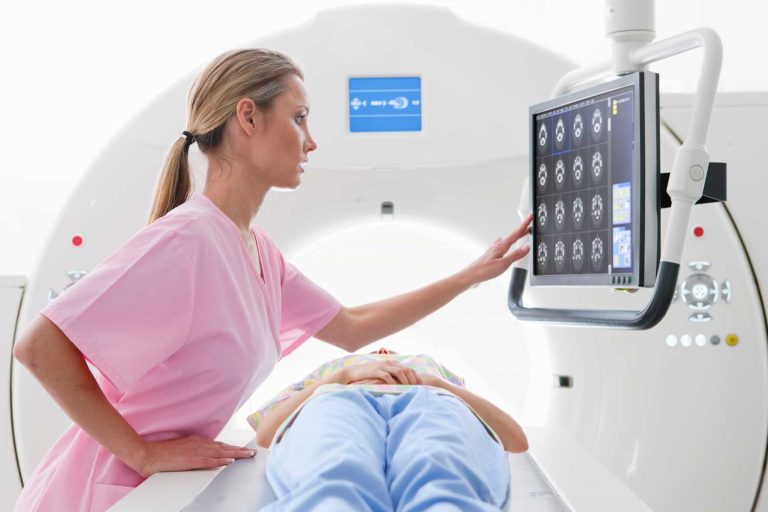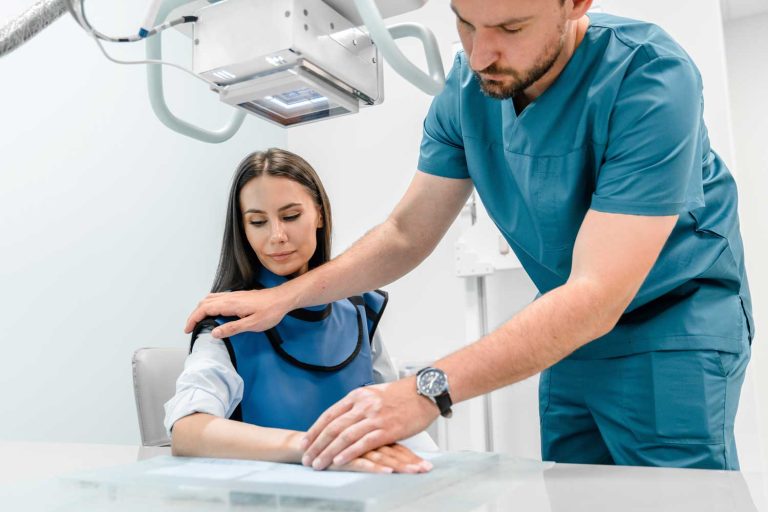
When your doctor orders imaging, two of the most common tests you may hear about are a CT scan and an MRI. Both produce detailed images of the inside of your body, and both help physicians diagnose conditions, guide treatment, and monitor disease — but they work very differently and are best suited to different clinical situations.
The short answer to “CT scan vs. MRI: what’s the difference?” is this: CT uses X-rays and is faster and better for bones, bleeding, and trauma; MRI uses magnetic fields with no radiation and is better for soft tissue — brain, spine, joints, and organs. But the full picture is more nuanced. This guide breaks it all down clearly.
At Independent Physicians Medical Center (IPMC) in Northeast Philadelphia, we offer both CT scanning and MRI services in a comfortable outpatient setting — so whatever your doctor recommends, you can get it close to home without hospital wait times.
CT Scan vs. MRI: Side-by-Side Comparison
The table below covers the key technical and practical differences between the two scans. For a deeper look at either test on its own, see our full guides: What Is a CT Scan? and What Is an MRI Scan?
| CT scan | MRI scan | |
|---|---|---|
| How it works | Rotating X-ray beam + computer reconstruction | Strong magnetic field + radio waves + computer processing |
| Radiation | Low–moderate (ionizing) | None |
| Best for | Bone, lungs, bleeding, trauma, cancer staging, emergency imaging | Soft tissue — brain, spine, joints, muscles, organs, blood vessels |
| Soft tissue detail | Good | Excellent — superior contrast |
| Bone detail | Excellent | Good |
| Scan time | 5–15 minutes | 20–60 minutes |
| Noise level | Quiet hum | Loud tapping / knocking (ear protection provided) |
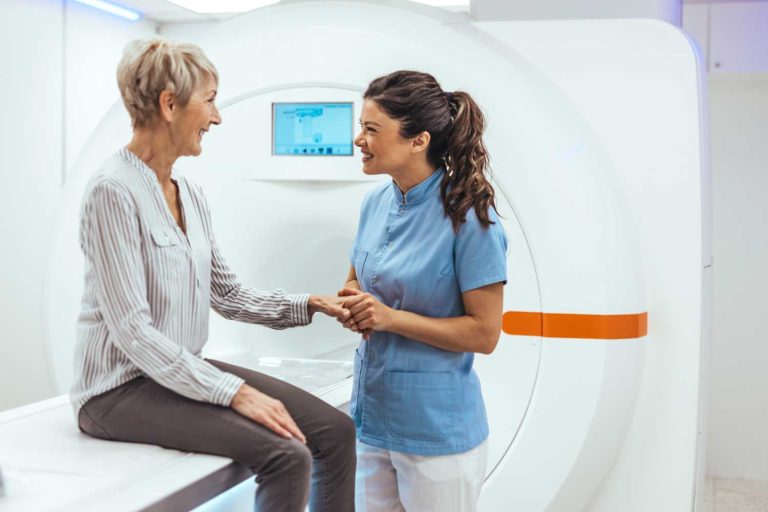
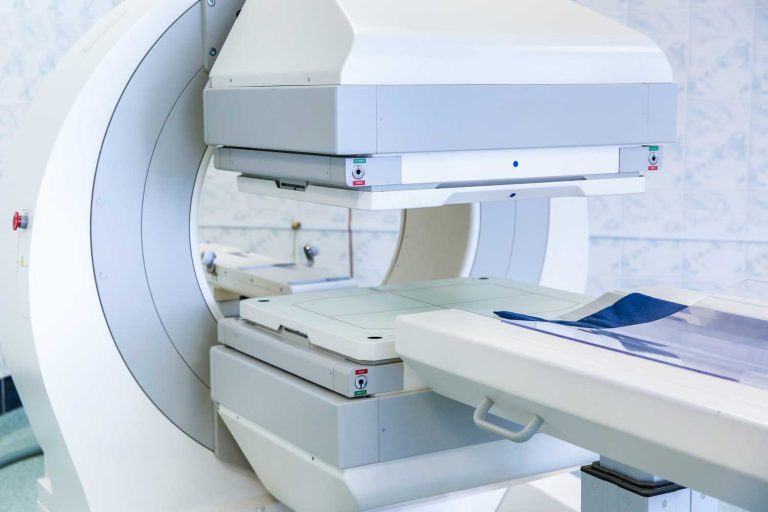
| Machine type | Wide, open ring — short tunnel | Enclosed tube (closed) or open-sided (open MRI) |
| Claustrophobia concern | Low | Moderate (closed MRI) |
| Contrast dye | Often iodine-based (IV) or barium (oral) | Sometimes gadolinium (IV) |
| Safe in pregnancy | Generally avoided | Usually yes, case by case |
| Metal implant concern | None from CT itself | Yes — must screen for pacemakers, implants |
| Recovery time | None | None |
| Relative cost | Moderate | Higher |
| Availability / speed | Faster to access; preferred in emergencies | Scheduling typically required |
CT Scan vs. MRI by Body Part and Condition
The best way to understand which test your doctor will order is by the body part or condition being evaluated. The table below shows which scan is typically preferred — though your doctor will always make the final decision based on your individual clinical situation.
| Body part / condition | CT scan | MRI scan |
|---|---|---|
| Brain — trauma, bleeding, stroke | ✓ First choice — fastest way to detect bleeding or skull fracture | Better for tumors, white matter disease, and detailed brain anatomy after CT rules out emergency |
| Spine — neck and lower back pain | Good for bone and disc issues; fast | ✓ First choice — superior for disc herniation, nerve compression, spinal cord detail. See our cervical MRI and lumbar MRI guides. |
| Knee, shoulder, and joints | Good for fractures; limited for cartilage and soft tissue | ✓ First choice — best for ligament tears, meniscus, cartilage, and tendons. See our knee MRI and shoulder MRI guides. |
| Chest and lungs | ✓ First choice — excellent for pneumonia, pulmonary embolism, COPD, lung nodules, and low-dose lung cancer screening | Limited use; not standard for routine chest imaging |
| Abdomen — pain, organs | ✓ Often first choice — fast diagnosis of appendicitis, kidney stones, bowel obstruction, and aortic aneurysm | Both used — MRI preferred for liver lesions, bile ducts, and pancreas when more detail is needed without radiation. See our abdominal MRI guide. |
| Pelvis — pelvic pain, reproductive organs | Fast overview; good for bone and gross anatomy | ✓ First choice — superior for uterus, ovaries, prostate, and bladder detail. See our pelvic MRI and prostate MRI guides. |
| Breast tissue | Limited role; not standard for breast evaluation | ✓ First choice (alongside mammography) for high-risk screening, dense breast tissue, and cancer staging. See our breast MRI guide. |
| Blood vessels (angiography) | Both used — CT angiography (CTA) is fast and excellent for coronary arteries, aorta, and pulmonary vessels | MR angiography (MRA) is radiation-free and excellent for neck, brain, and renal vessels. See our MRA guide. |
| Liver, gallbladder, bile ducts | Good for initial evaluation and cancer staging | ✓ Often preferred — MRCP (a specialized MRI) provides exceptional bile duct detail without radiation. See our liver MRI guide. |
| Trauma and emergencies | ✓ First choice — fast, comprehensive, and available around the clock | Too slow for acute emergencies |
| Cancer — staging and monitoring | Both used — CT is standard for initial staging; MRI provides more detail for brain, liver, prostate, and soft tissue tumors | Both used depending on tumor type and location |
| Children and pregnancy | Avoided if possible — radiation concern | Preferred when imaging is needed — no radiation |
CT Scan vs. MRI: Contrast Dye Comparison
Both CT and MRI can be performed with or without contrast dye — a substance injected through an IV (or in CT’s case, sometimes swallowed) that makes certain structures stand out more clearly on the images. The type of contrast used differs between the two scans, as does the reason for using it.
| CT contrast | MRI contrast | |
|---|---|---|
| Contrast agent | Iodine-based (IV) or barium sulfate (oral) | Gadolinium (IV only) |
| Why it’s used | Highlights blood vessels, organs, and tumor borders; essential for CT angiography and cancer staging | Highlights areas of inflammation, blood-brain barrier breakdown, and tumor vascularity |
| Allergy risk | Iodine contrast — rare allergic reactions possible; inform your team if you have prior contrast reactions | Gadolinium — very rare reactions; inform your team of kidney problems |
| Kidney concerns | Iodine contrast can affect kidneys — your team checks creatinine/GFR for at-risk patients | Gadolinium retained in patients with severely impaired kidneys — use carefully |
| After the scan | Drink extra water to flush iodine from system | Gadolinium clears naturally; extra hydration recommended |
For IPMC-specific contrast preparation instructions, see our CT scan preparation guide and MRI and MRA with contrast guide.
When Does Your Doctor Order Both?
In many clinical situations, CT and MRI are complementary rather than competing. A CT scan is often done first because it’s fast and provides a rapid overview — especially in urgent situations. An MRI may follow when more detailed soft tissue evaluation is needed or when a finding on the CT requires further characterization.
Common scenarios where both may be ordered:
- Brain tumor: CT first to check for acute bleeding; MRI for detailed tumor characterization, staging, and surgical planning.
- Spine injury: CT to assess bone fractures; MRI to evaluate spinal cord and nerve compression.
- Liver mass: CT for initial detection; MRI for tissue characterization to distinguish benign lesions from malignancy.
- Cancer staging: CT to assess the chest, abdomen, and pelvis broadly; MRI for detailed evaluation of specific organ involvement.
- Abdominal aortic aneurysm: CT for initial sizing and surveillance; MRI for detailed planning before repair in patients who need to minimize radiation exposure.
Radiation: CT Scan vs. MRI — What Patients Should Know
One of the most common patient questions is about radiation. The key facts:
- MRI uses no radiation at all. It relies entirely on magnetic fields and radio waves, making it safe for repeated imaging and for patients who need to minimize cumulative radiation exposure.
- CT uses ionizing radiation — more than a standard X-ray, but modern CT protocols are highly optimized to keep doses as low as diagnostically possible. The radiation from a single CT scan is generally comparable to a few months to a couple of years of natural background radiation exposure.
- For most patients, the diagnostic benefit of a CT scan far outweighs the small radiation risk — especially in acute situations. However, for children, pregnant women, and patients who need repeated imaging over time, your doctor may prefer MRI when it can provide equivalent diagnostic information.
- The U.S. Food and Drug Administration notes that CT benefits typically outweigh risks when the exam is medically indicated, and recommends discussing any radiation concerns with your doctor before the scan.
CT Scan vs. MRI: Which Is More Accurate?
Neither test is universally “more accurate” — accuracy depends entirely on what is being evaluated. Each modality has specific strengths:
- CT is more accurate for detecting acute bleeding in the brain, identifying kidney stones, evaluating lung disease, and assessing bone fractures.
- MRI is more accurate for evaluating the spinal cord, detecting early strokes (diffusion-weighted MRI), characterizing liver lesions, assessing knee and shoulder injuries, and evaluating prostate and pelvic abnormalities.
- According to RadiologyInfo.org (published by the American College of Radiology), the choice between CT and MRI depends on the clinical question being asked — and often, one test will provide the answer while the other would not.
Your radiologist and referring physician work together to select the most appropriate modality — and at IPMC, both are available at the same convenient Northeast Philadelphia location.
IPMC Radiology
CT Scan and MRI Available at IPMC in Philadelphia
Convenient Location and Flexible Hours
Fast Appointments & Quick Results
Comfortable Outpatient Setting
Avoid the stress of a hospital visit. Our welcoming center is designed for efficiency and patient comfort
Experienced, Board-Certified Physicians
Your imaging is reviewed by experienced professionals dedicated to accuracy and personalized care.
Schedule Your CT Scan or MRI at IPMC
If your physician has recommended a CT scan or MRI, IPMC provides reliable outpatient imaging close to home in Northeast Philadelphia.
- Call 215-464-3300 to book your appointment.
- 9908 E. Roosevelt Blvd., Philadelphia, PA 19115
- Monday–Friday, 8AM–8PM
At Independent Physicians Medical Center, we believe medical care should be personal, efficient, and focused on delivering the answers you and your doctor need.