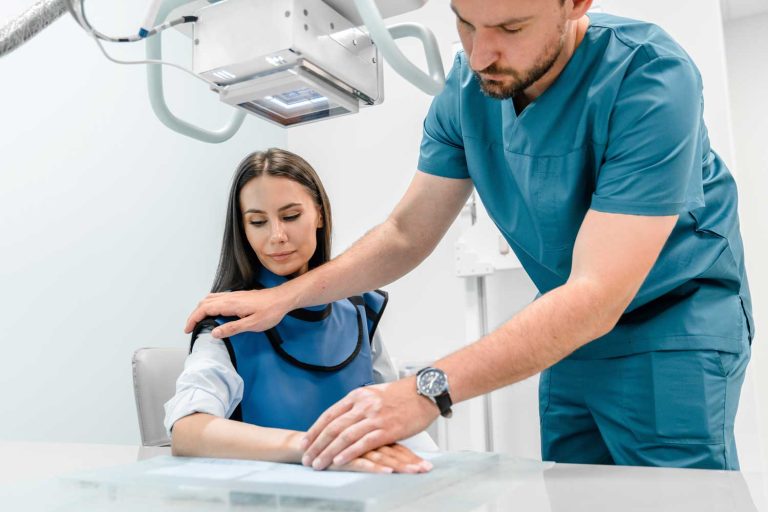
At Independent Physicians Medical Center (IPMC) in Northeast Philadelphia, we are committed to providing thorough breast imaging in a supportive, private environment with experienced staff and board-certified radiologists.
What Is a Breast MRI?
A breast MRI uses powerful magnets and radio waves to produce highly detailed images of the internal structures of the breast, including the breast tissue, ducts, lymph nodes, and chest wall. It does not use radiation, making it a safe complement to mammography.
Breast MRI is not a replacement for mammography — rather, it is an additional tool that can detect cancers that mammograms may miss, particularly in women with dense breast tissue. Breast MRI is performed with contrast dye (gadolinium), which is injected through an IV. Cancerous areas often absorb contrast dye differently than normal tissue, creating a characteristic enhancement pattern that helps radiologists identify suspicious areas.
Why Would Your Doctor Order a Breast MRI?
Your doctor may recommend a breast MRI in the following situations:
- You are at high risk for breast cancer (generally defined as a 20% or greater lifetime risk) due to family history, known genetic mutations such as BRCA1 or BRCA2, or a personal history of chest radiation therapy before age 30
- A mammogram or ultrasound revealed a suspicious finding that needs further characterization before a biopsy decision is made
- You have been newly diagnosed with breast cancer, and your doctor wants to determine the full extent of the disease in the affected breast and check the opposite breast (staging)
- Monitoring the response of a known breast cancer to chemotherapy (neoadjuvant treatment) — MRI can show whether the tumor is shrinking
- Evaluating breast implants for rupture, leakage, or complications — MRI is considered the most accurate test for implant evaluation
- Screening when breast tissue is very dense, which can make mammographic detection of cancers more difficult
- Investigating a lump or nipple discharge when other imaging has been inconclusive
- Post-surgical follow-up to distinguish between scar tissue and possible cancer recurrence
- Evaluating the extent of ductal carcinoma in situ (DCIS) or invasive cancer before surgical planning
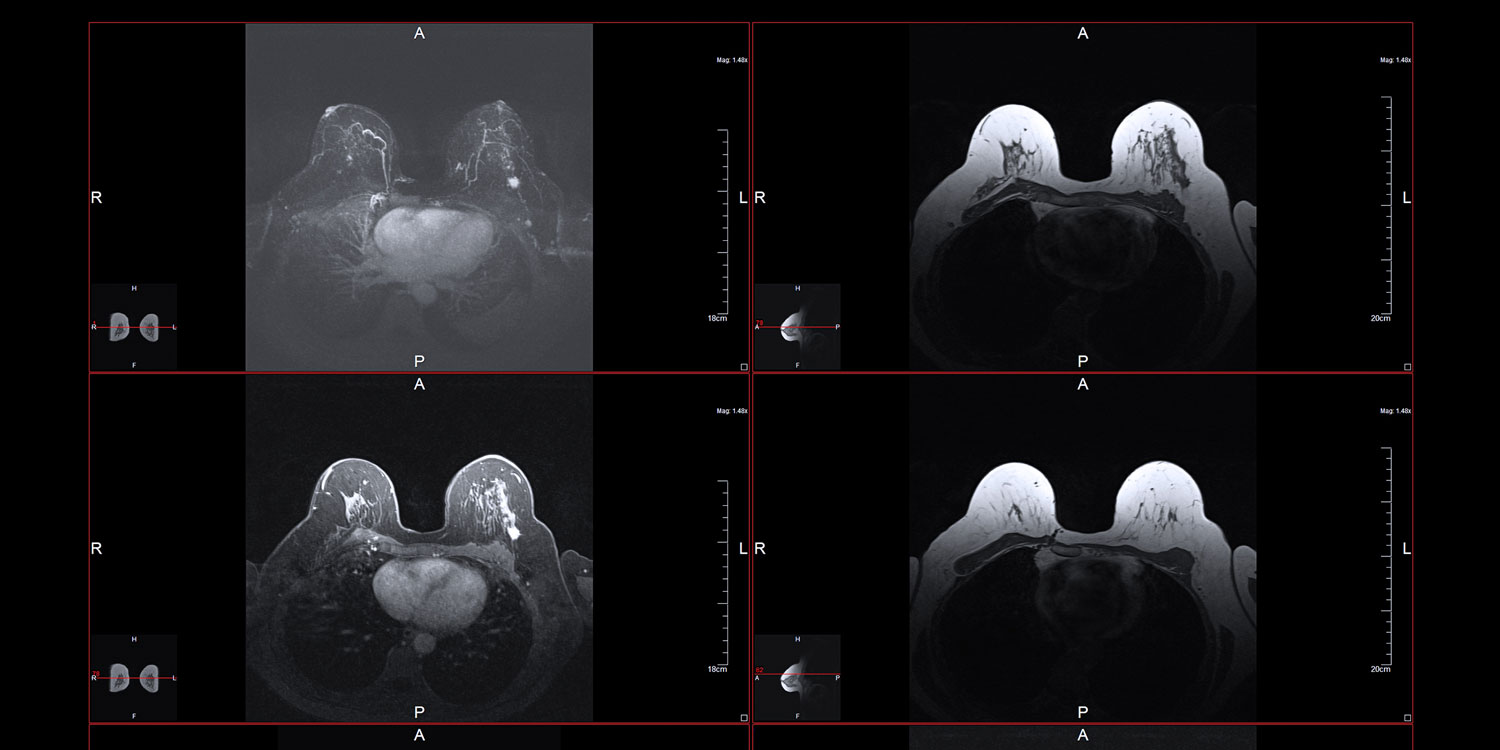
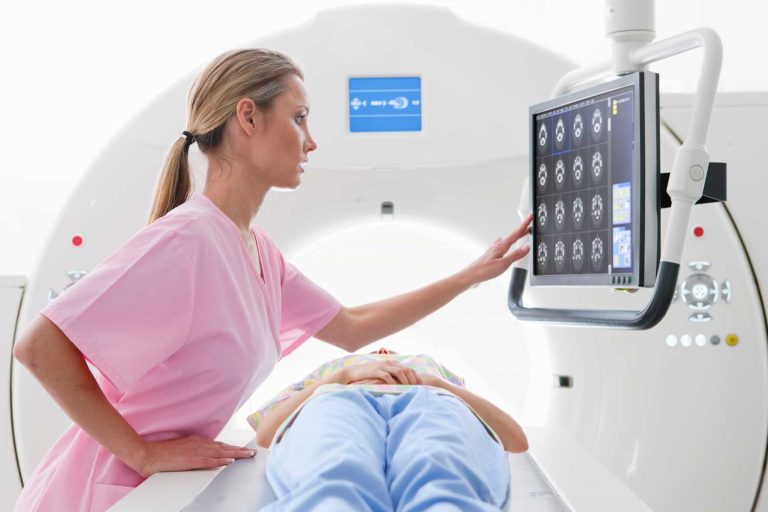
Breast MRI scan image used for cancer screening and dense tissue evaluation
How to Prepare and What to Expect
Timing. For premenopausal women, breast MRI is ideally scheduled during days 7 through 14 of the menstrual cycle (the second week), when hormonal changes in breast tissue are minimal and images are clearest.
Contrast dye. Breast MRI always uses gadolinium contrast, injected through an IV. Inform your doctor about any allergies or kidney problems.
The procedure. You’ll lie face down on a padded table with openings that allow your breasts to rest in a special breast coil without compression. The table slides into the MRI machine. The scan typically takes 30 to 60 minutes. You’ll hear tapping and humming sounds, and a technologist will communicate with you through an intercom.
Understanding Your Breast MRI Results
A board-certified radiologist at IPMC will analyze every image using a standardized reporting system called BI-RADS (Breast Imaging Reporting and Data System) and prepare a detailed report for your referring physician. Key findings include:
Enhancement patterns. Areas where the contrast dye is absorbed rapidly and washes out quickly are considered suspicious. The radiologist evaluates the shape, margins, and kinetics of any enhancing lesions to determine whether they require follow-up.
Mass characteristics. Any masses are described by size, shape (round, oval, irregular), margins, and internal enhancement — features that help distinguish benign from potentially malignant findings.
Non-mass enhancement. Regions of enhancement that don’t form a discrete mass — such as those seen with DCIS (ductal carcinoma in situ) — are identified and characterized.
Extent of disease. For known cancers, the radiologist documents the size and distribution of the tumor, involvement of the skin or chest wall, and whether the opposite breast shows any suspicious findings.
Implant integrity. For patients with breast implants, the radiologist evaluates for signs of rupture, including intracapsular or extracapsular silicone, using specialized sequences designed for implant assessment.
BI-RADS category. Each finding is assigned a BI-RADS score from 0 to 6, ranging from “incomplete — needs additional imaging” to “known biopsy-proven malignancy,” guiding your doctor’s next steps.
After Your Breast MRI
There is no recovery time after a breast MRI. You can resume normal activities, eating, and medications immediately. Staying well hydrated helps your body clear the contrast dye efficiently.
Depending on your BI-RADS score and the specific findings, your doctor may recommend no further action at this time with routine annual screening, short-interval follow-up imaging in 6 months, ultrasound-guided or MRI-guided biopsy of a suspicious area, surgical consultation for treatment planning, or additional imaging to evaluate the extent of a known cancer.
At IPMC, we prioritize delivering results to your referring physician promptly — so your next step in care doesn’t have to wait.