What Is an Abdominal MRI?
An abdominal MRI uses magnetic fields and radio waves to create highly detailed cross-sectional images of the organs, blood vessels, and soft tissues in your abdominal region. Its superior soft tissue contrast makes it especially valuable for characterizing masses and lesions, evaluating the liver and bile ducts, assessing kidney and adrenal conditions, and investigating pancreatic problems.
Abdominal MRI can be combined with specialized techniques such as MRCP (for the bile and pancreatic ducts), MR angiography (for blood vessels), and MR enterography (for the small bowel) to provide targeted information for specific conditions.
Why Would Your Doctor Order an Abdominal MRI?
Your doctor may recommend an abdominal MRI to evaluate:
- Unexplained abdominal pain, swelling, or tenderness
- Liver conditions including fatty liver disease, cirrhosis, hemochromatosis, or liver masses
- Kidney problems including cysts, tumors, obstructions, or anomalies
- Pancreatic conditions including pancreatitis, pancreatic cysts, or pancreatic tumors
- Adrenal gland masses or abnormalities
- Bile duct and gallbladder conditions, including stones, strictures, or tumors
- Splenic abnormalities
- Blood vessel abnormalities, including renal artery stenosis or aortic aneurysms
- Cancer staging or monitoring treatment response
- Abnormal findings from blood tests, ultrasound, or CT scan that require further characterization
- Inflammatory bowel disease (Crohn’s disease) when MR enterography is used

Abdominal MRI scan showing high-resolution cross-section of abdominal organs
How to Prepare for Your Abdominal MRI
Fasting. You will typically be asked to fast for four to six hours before your abdominal MRI. This reduces bowel motion and gas, which can interfere with image quality. You may usually continue taking regular medications with a small sip of water unless instructed otherwise.
Contrast dye. Most abdominal MRIs use gadolinium contrast dye injected through an IV. Some specialized protocols — such as those using a liver-specific contrast agent — provide additional functional information. Let your doctor know about any allergies or kidney problems before the exam.
Metal safety. Remove all jewelry and metal objects. Inform your care team of any implants, surgical hardware, or pacemakers.
Clothing. Wear comfortable, loose-fitting clothing without metal zippers or snaps. You may change into a gown.
Breath-holding. You will be asked to hold your breath for short periods (typically 15–20 seconds) at several points. The abdomen moves with every breath, so breath-holding is essential for sharp images. Practicing at home before your appointment can be helpful.
What Happens During an Abdominal MRI
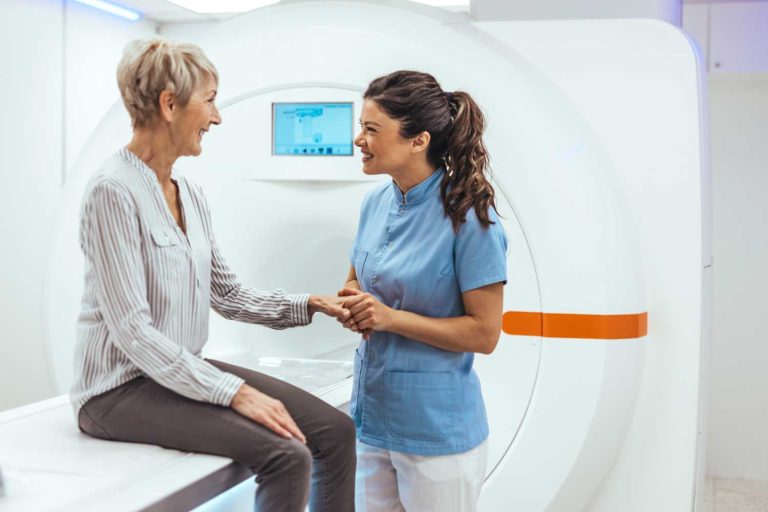
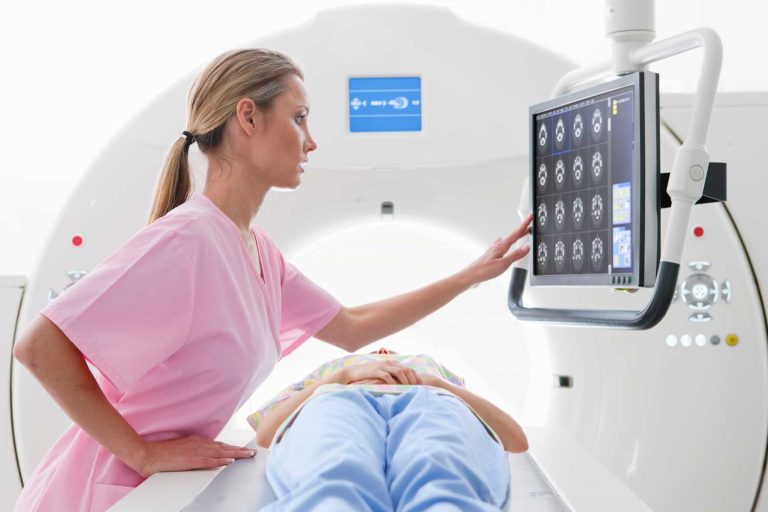
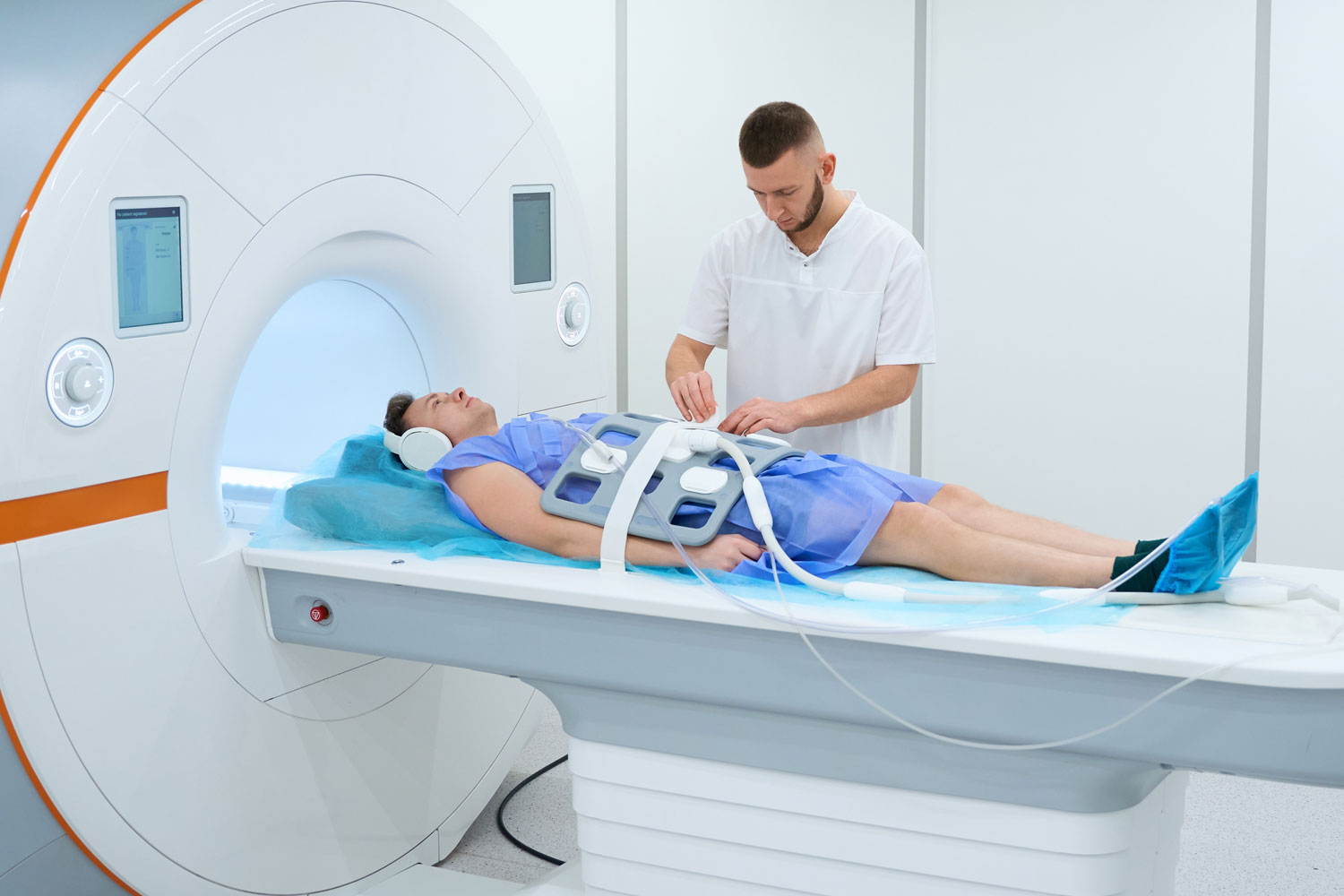
You’ll lie on a cushioned table that slides into the MRI machine. A coil is placed over your abdomen to enhance image quality. The scan typically takes 30 to 60 minutes, depending on the specific protocol and whether contrast is used. The machine produces rhythmic tapping and humming sounds — ear protection is provided. A technologist communicates with you through an intercom throughout and will guide you through each breath-hold sequence. Contrast dye, if ordered, is injected partway through the scan, and additional images are captured at timed intervals. There is no recovery time — you can return to normal activities immediately after.
Understanding Your Abdominal MRI Results
A board-certified radiologist at IPMC will carefully review every image and prepare a detailed report for your referring doctor. Key findings include:
Liver. The radiologist evaluates for masses, cysts, fatty changes, cirrhosis, iron overload, and signs of inflammation. Enhancement patterns after contrast help distinguish benign lesions (such as hemangiomas or cysts) from potentially malignant findings.
Kidneys. Cysts, tumors, stones causing obstruction, and congenital abnormalities are identified. MRI is particularly useful for characterizing complex kidney masses that are indeterminate on CT.
Pancreas. The pancreas is evaluated for masses, cysts (including IPMN — intraductal papillary mucinous neoplasm), ductal dilation, and signs of pancreatitis. MRCP sequences provide detailed views of the pancreatic duct.
Adrenal glands. Adrenal adenomas, pheochromocytomas, and metastatic deposits are identified and characterized using specific MRI sequences including chemical shift imaging.
Gallbladder and bile ducts. Stones, strictures, polyps, and masses are evaluated. MRCP provides a non-invasive roadmap of the entire biliary system.
Spleen and lymph nodes. Splenomegaly, splenic lesions, and enlarged abdominal lymph nodes are documented and assessed.
Blood vessels. The aorta, celiac artery, mesenteric vessels, and renal arteries are evaluated for aneurysms, stenosis, or thrombosis when MR angiography sequences are included.
Follow-Up After Your Abdominal MRI
There is no downtime after the scan. You can resume your normal diet, activities, and medications right away. If contrast dye was used, drinking extra water helps your body clear it efficiently.
Depending on the findings, your doctor may recommend a biopsy of a suspicious lesion, referral to a gastroenterologist, hepatologist, urologist, or oncologist, additional imaging such as a CT scan or ultrasound for follow-up, treatment for any identified condition, or routine monitoring with periodic imaging.
At IPMC, we work to deliver results to your referring physician promptly — so your next step in care doesn’t have to wait.