Gaucher disease is a rare inherited metabolic disorder in which the body cannot properly break down a fatty substance called glucocerebroside. This buildup occurs primarily in cells of the bone marrow, spleen, and liver, leading to a range of symptoms including organ enlargement, bone pain and fractures, anemia, and blood clotting problems. Medical imaging plays an absolutely central role in diagnosing complications, monitoring disease progression, and guiding treatment for patients living with this condition.
At Independent Physicians Medical Center (IPMC) in Northeast Philadelphia, we offer the full range of imaging services used in Gaucher disease management — including MRI, X-ray, DEXA scan, ultrasound, and CT — all under one roof in our comfortable outpatient facility.
What Is Gaucher Disease?
Gaucher disease is the most common lysosomal storage disorder, caused by a deficiency of the enzyme glucocerebrosidase (also called beta-glucosidase). Without enough of this enzyme, a fatty substance called glucocerebroside accumulates inside macrophages — a type of white blood cell — causing them to become bloated “Gaucher cells.” These abnormal cells infiltrate the bone marrow, spleen, liver, and occasionally the lungs and brain.
There are three types:
Type 1 (non-neuropathic) is the most common form, accounting for about 90% of cases. It does not affect the brain and can present at any age. It is particularly prevalent in the Ashkenazi Jewish population (approximately 1 in 500-1,000 individuals). Symptoms include an enlarged spleen and liver (hepatosplenomegaly), anemia and low platelet counts (thrombocytopenia), bone pain and bone crises, osteoporosis, and pathological fractures.
Types 2 and 3 involve progressive neurological deterioration in addition to the visceral and skeletal manifestations.
Treatment with enzyme replacement therapy (ERT) — which replaces the missing enzyme through regular IV infusions — has transformed the management of Gaucher disease. Substrate reduction therapy (SRT) is an oral alternative for some patients. Imaging is essential for determining when to start treatment and for monitoring how well it is working.
How Is Imaging Used in Gaucher Disease?
Because Gaucher disease affects multiple organ systems, different imaging modalities provide different critical pieces of information:
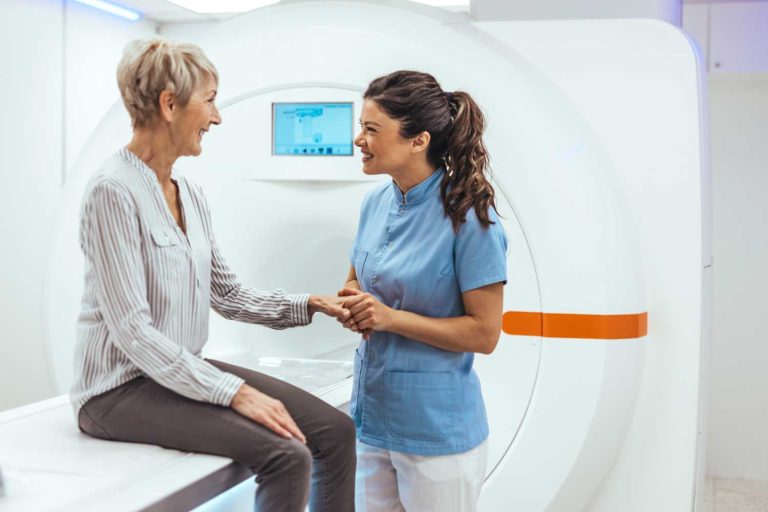
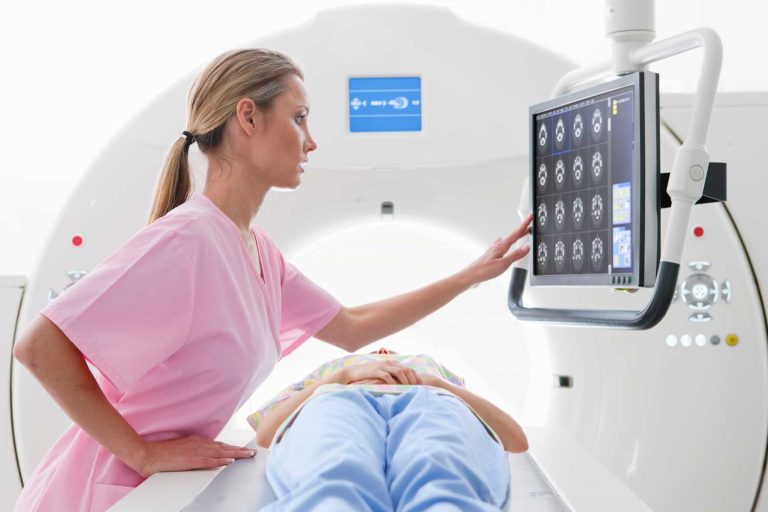
MRI — The Gold Standard for Bone Marrow and Organ Assessment
MRI is considered the most important imaging tool in Gaucher disease management. It is used to assess bone marrow infiltration — Gaucher cells replace normal fat-containing marrow, which changes the MRI signal. On T1-weighted images, infiltrated marrow appears abnormally dark compared to the normal bright signal of fat-containing marrow. This allows radiologists to map the extent of marrow involvement and track changes with treatment (as ERT clears Gaucher cells, fat marrow returns and the signal brightens).
MRI of the abdomen measures liver and spleen volumes with precision — these volumetric measurements are critical for monitoring treatment response. MRI also detects bone complications including avascular necrosis (death of bone tissue from interrupted blood supply — particularly in the femoral heads), bone infarcts, pathological fractures, and vertebral compression fractures.
A semi-quantitative scoring system called the Bone Marrow Burden (BMB) score uses MRI to grade the severity of marrow involvement and track changes over time.
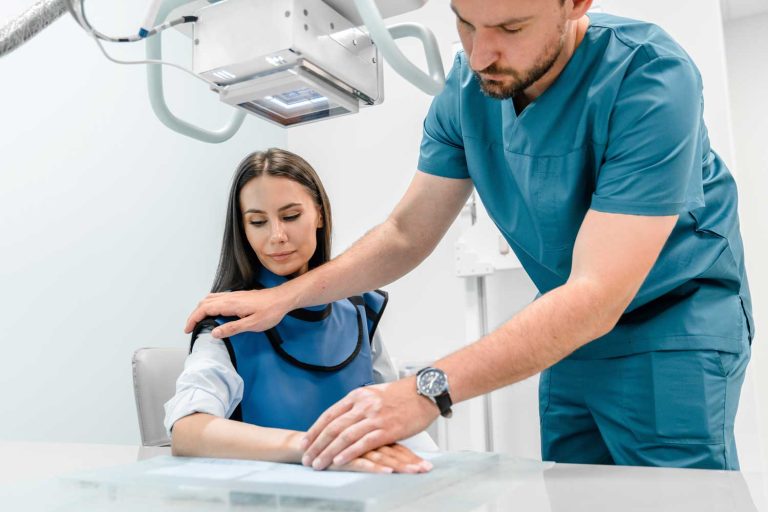
X-Ray — Skeletal Evaluation
Plain radiographs are useful for detecting characteristic skeletal changes in Gaucher disease, including the Erlenmeyer flask deformity — a widening and under-modeling of the distal femur (lower thighbone) that gives it a flask-like shape. This is one of the most recognizable radiographic signs of Gaucher disease. X-rays also show cortical thinning (weakened outer bone), lytic lesions (areas of bone destruction), pathological fractures, and osteosclerosis (areas of abnormally dense bone).
DEXA Scan — Bone Density Assessment
Dual-energy X-ray absorptiometry (DEXA) measures bone mineral density, which is important because Gaucher disease can cause significant osteopenia (reduced bone density) and osteoporosis, increasing fracture risk. Regular DEXA scans help track bone density changes over time and assess the effectiveness of treatment in improving bone health.
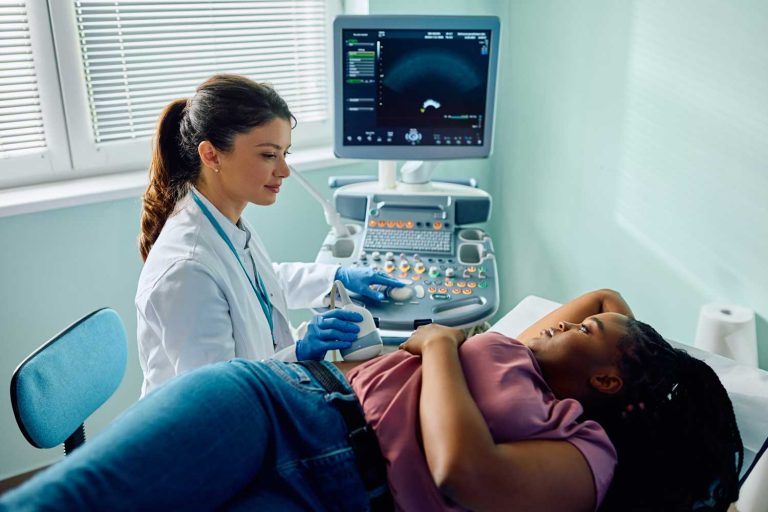
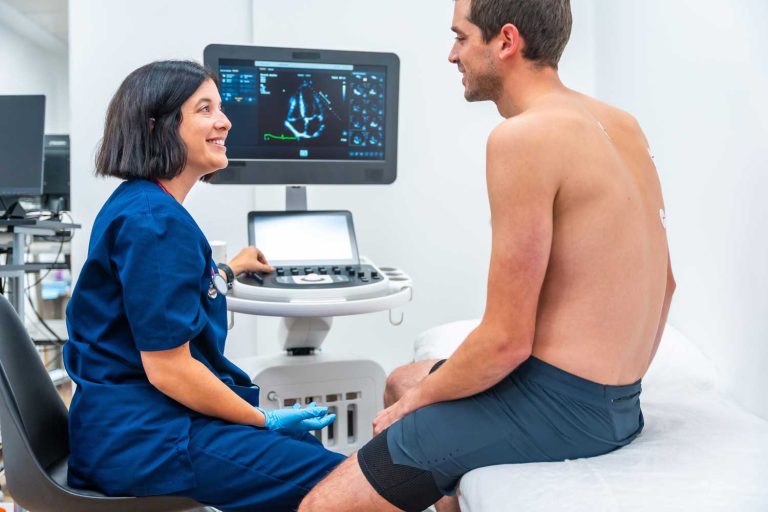
Ultrasound — Organ Size Monitoring
Abdominal ultrasound provides a radiation-free method for measuring liver and spleen size. While MRI is more precise for volumetric assessment, ultrasound is widely available, quick, and useful for interim monitoring between MRI examinations.
CT Scan — Complementary Evaluation
CT may be used to evaluate complications in the chest (pulmonary involvement), assess fractures in detail, or provide additional organ evaluation when MRI is not available. CT can also detect splenic infarcts and other abdominal complications.
Why Regular Imaging Matters in Gaucher Disease
For patients with Gaucher disease, imaging is not a one-time event — it is an ongoing component of lifelong care. Regular imaging allows doctors to:
Detect early signs of organ damage or bone marrow infiltration before symptoms develop — this is critical for determining the optimal time to start enzyme replacement therapy. Monitor the body’s response to treatment over time — ERT typically improves blood counts and reduces organ size within months, but skeletal improvement takes years and requires long-term imaging follow-up. Identify complications such as bone crises (episodes of severe bone pain caused by acute infarction), avascular necrosis, pathological fractures, or splenic infarcts. Track bone density to assess osteoporosis risk and guide preventive interventions.
Imaging is typically performed at the time of diagnosis and then at regular intervals — commonly every 12 to 24 months for adults and more frequently for children, though the schedule is individualized based on disease severity, treatment status, and clinical findings.
Gaucher Disease Imaging at IPMC
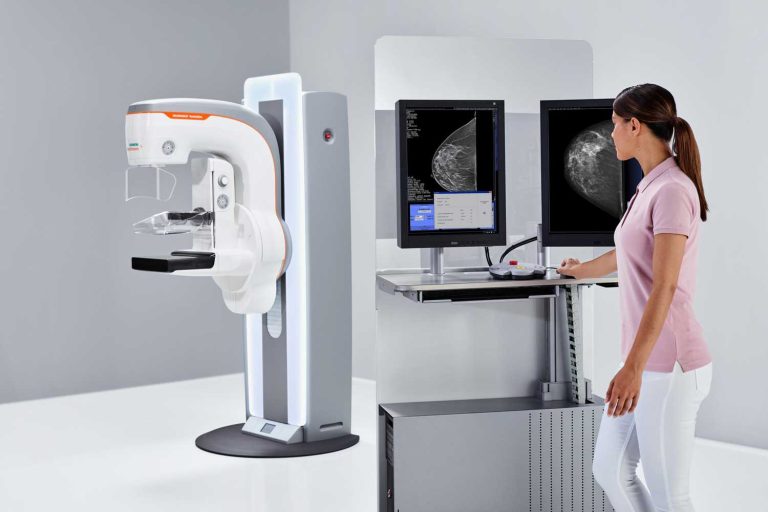
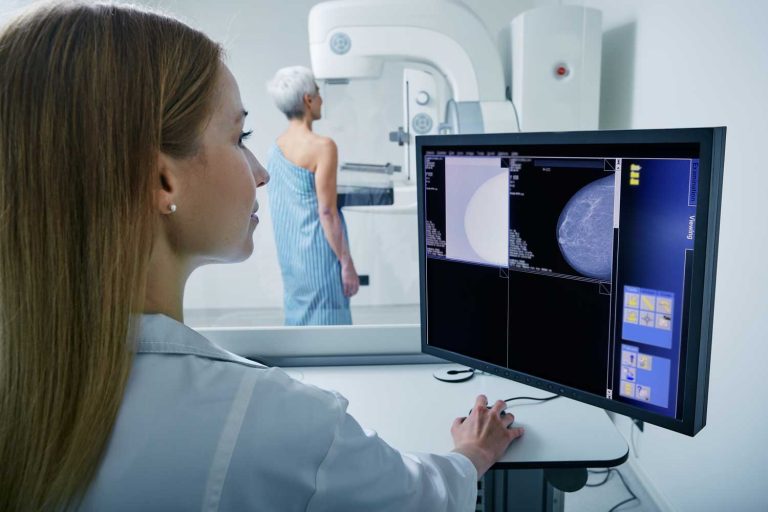
At IPMC, we offer the imaging modalities most commonly used in Gaucher disease care under one roof: MRI (including abdomen and musculoskeletal protocols), X-ray, DEXA scans, ultrasound, and CT. Our board-certified radiologists work closely with your referring physician, hematologist, or metabolic disease specialist to ensure accurate interpretations that support your ongoing care.
If you or a family member has been diagnosed with Gaucher disease, our team is here to provide the imaging your doctor needs in a comfortable, private outpatient setting.
Radiology at IPMC
Why Choose IPMC for Your Imaging in Philadelphia?
Convenient Location and Flexible Hours
Full Range of Imaging Services
MRI, CT, X-ray, ultrasound, DEXA, and more—all under one roof so your doctor can order exactly what you need.
Board-Certified Radiologists
Every scan is interpreted by an experienced, board-certified radiologist who works closely with your referring doctor.
Comfortable, Private Outpatient Setting
Skip the hospital. Get your imaging in a calm, welcoming environment designed around patient comfort.
Schedule Your Imaging at IPMC
If your doctor has recommended imaging for your condition, the team at IPMC is here to help.
- Call 215-464-3300 to schedule your appointment.
- Visit us at 9908 E. Roosevelt Blvd., Philadelphia, PA 19115.
At Independent Physicians Medical Center, we believe medical imaging should be personal, efficient, and comfortable—giving you peace of mind and the detailed answers you deserve.