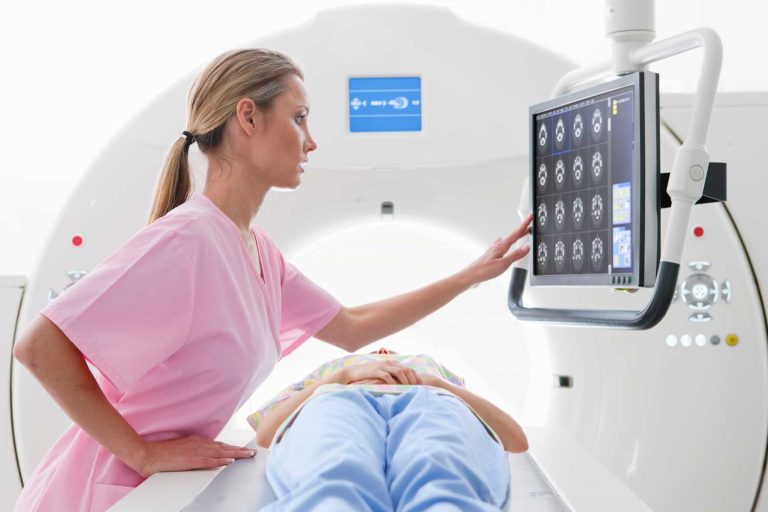
If your doctor has ordered an echocardiogram, the good news is that most echo exams require little to no preparation at all. An echocardiogram — commonly called an “echo” — uses sound waves, not radiation, to create detailed real-time images of your heart. It is completely painless, non-invasive, and one of the most informative cardiac tests available.
At Independent Physicians Medical Center (IPMC) in Northeast Philadelphia, our cardiology center performs standard echocardiograms, stress echocardiograms, and related cardiac studies — all interpreted by board-certified cardiologists in a comfortable, private outpatient setting.
What you need to do to prepare depends on which type of echo you are having. The overview below covers all three.
What Does an Echocardiogram Show?
Before getting into preparation, it helps to understand what the test evaluates. A standard transthoracic echocardiogram (TTE) gives your cardiologist a real-time look at:
- Heart chamber sizes — are the chambers dilated or thickened?
- Wall motion — is every segment of heart muscle contracting normally?
- Ejection fraction (EF) — the percentage of blood pumped out with each heartbeat (normal range: 55–70%)
- Valve function — are valves opening and closing properly? Is there stenosis (narrowing) or regurgitation (leaking)?
- Pericardium — is there fluid around the heart?
- Blood flow patterns — Doppler imaging measures flow velocities and direction through each valve and chamber
- Congenital abnormalities — structural defects present from birth
According to the American Heart Association, echocardiography is one of the most widely used and versatile tools in cardiology, capable of diagnosing a broad range of conditions without any radiation exposure.
Echocardiogram Preparation: Quick-Reference by Echo Type
Preparation varies significantly depending on which type of echocardiogram your doctor has ordered. The table below summarizes the key differences at a glance. Detailed instructions for each type follow.
| Standard echo (TTE) | Stress echo | Transesophageal echo (TEE) | |
|---|---|---|---|
| Fasting required | No | Light meal only, 3–4 hrs before | Yes — fast 4–6 hrs |
| Avoid caffeine | No | Yes — 24 hrs before | No |
| Hold medications | No (take as normal) | Beta-blockers — ask your doctor | Confirm with your doctor |
| Special clothing | Comfortable two-piece | Athletic shoes + exercise clothes | Comfortable two-piece |
| Driver needed | No | Usually no | Yes — sedation is used |
| Approx. duration | 30–60 minutes | 45–60 minutes | 60–90 minutes |
| Recovery time | None — resume normal activities immediately | None for most patients | Until sedation wears off (a few hours) |
Standard Echocardiogram (TTE) — Minimal Preparation
The standard transthoracic echocardiogram is the most common type and requires virtually no preparation on your part.
You can eat, drink, and take all medications as normal. There are no fasting requirements and no restrictions on caffeine or alcohol. Simply arrive at your appointment as you normally would.
Clothing. Wear a comfortable two-piece outfit — you will need to undress from the waist up and will be given a front-opening gown. A two-piece outfit makes this easier and more comfortable. Leave jewelry at home or be prepared to remove necklaces before the exam.
What to bring. Your insurance card, photo ID, and a list of your current medications. If you have had prior echocardiograms from another facility, bring those images or reports — comparing to prior studies significantly improves diagnostic value.
Arrive a few minutes early to complete any paperwork. The exam itself typically takes 30 to 60 minutes.
Stress Echocardiogram — More Specific Preparation Needed
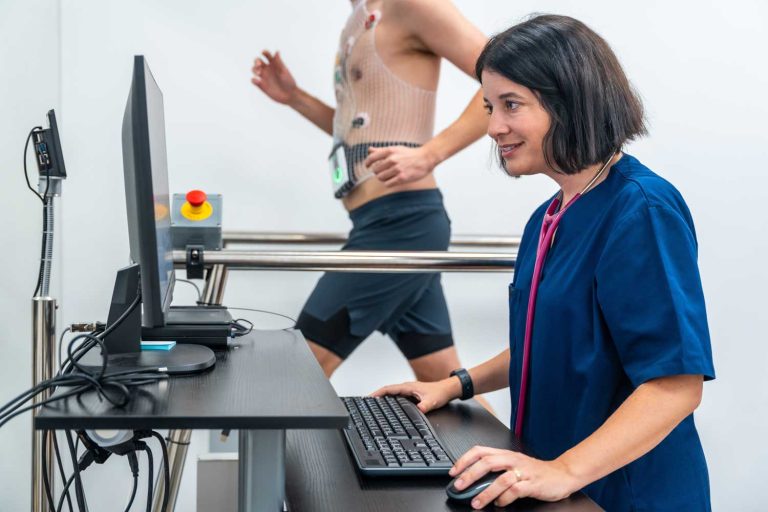
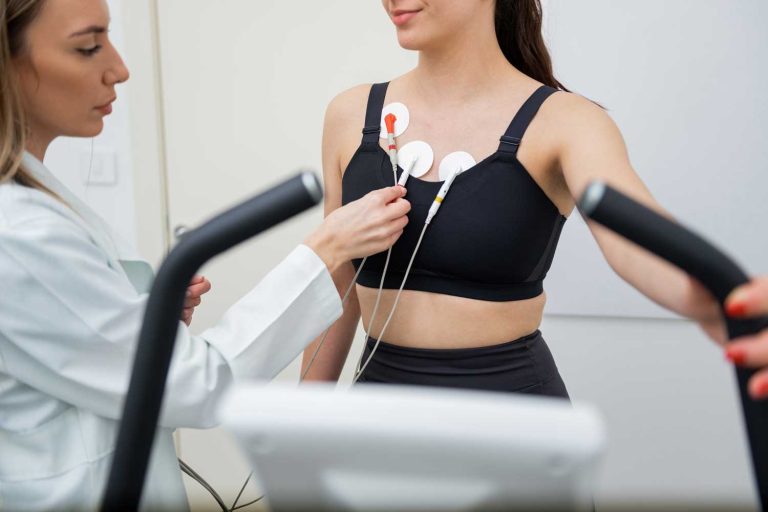
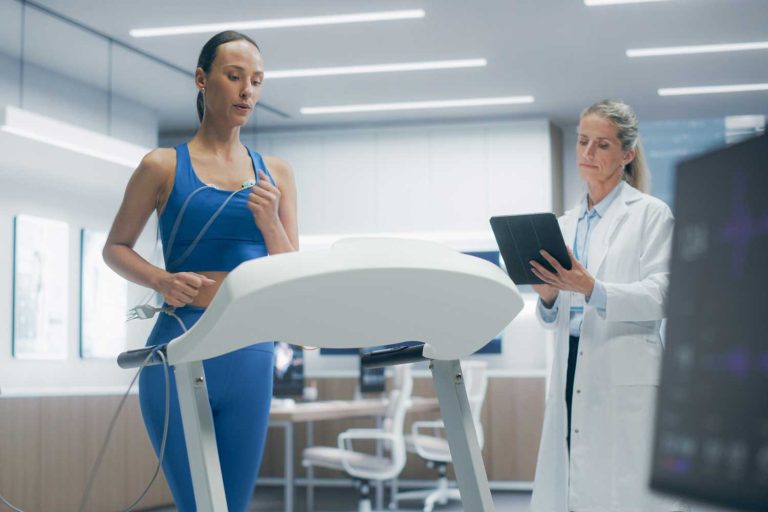
A stress echocardiogram combines ultrasound imaging with treadmill exercise to show how your heart performs under physical demand. Because exercise and heart rate response are central to the test, preparation is more specific. Our full stress echo preparation guide has all the details. The most important points:
Avoid caffeine for 24 hours. This is the single most critical step. Skip all coffee, tea (including decaffeinated), soda, chocolate, and energy drinks for the full 24 hours before the test. Caffeine can interfere with how your heart responds and produce misleading results.
Beta-blockers — check with your prescribing doctor. Do not take beta-blockers on the morning of the test unless your doctor specifically says to continue them. These medications slow the heart rate and may prevent you from reaching the target heart rate needed for a diagnostic result. Never stop any medication without first confirming with your physician.
Eat lightly. Avoid a heavy meal for 3 to 4 hours before the test. A light snack is fine — exercising on a very full stomach is uncomfortable. Stay well hydrated with water.
Wear athletic clothing and supportive shoes. You will walk on a treadmill, so wear comfortable exercise clothes and supportive lace-up athletic shoes. Avoid dresses, skirts, sandals, or dress shoes.
If you cannot exercise due to physical limitations, a pharmacological stress echo using medication to increase heart rate is an excellent alternative that provides the same diagnostic information without the treadmill.
Transesophageal Echocardiogram (TEE) — More Involved Preparation
A transesophageal echocardiogram passes a specialized ultrasound probe through the mouth and into the esophagus, which sits directly behind the heart. This position provides far more detailed images of certain structures — particularly the heart valves, the back of the heart, and the aorta — than a surface echo can achieve. Because sedation is used, this type of echo requires more preparation.
Fast for 4 to 6 hours before the exam. Do not eat or drink anything (except water in small sips to take medications, if needed) for at least 4 to 6 hours before your appointment. An empty stomach is essential to reduce the risk of nausea or aspiration during the procedure.
Arrange a driver. You will receive a throat-numbing spray and a sedative to keep you comfortable during the procedure. You will not be able to drive yourself home afterward — please arrange for a friend, family member, or car service to take you. Plan to rest at home for the remainder of the day.
Medications. Confirm with your doctor which medications to take on the day of the TEE. Most routine medications can be taken with a small sip of water, but your care team will give you specific instructions based on your medical history.
Clothing. Wear comfortable, loose-fitting clothing. A hospital gown will be provided for the procedure.
Your care team will provide complete written instructions when you schedule your TEE. Contact IPMC at 215-464-3300 if you have any questions before your appointment.
What Happens During a Standard Echocardiogram at IPMC?
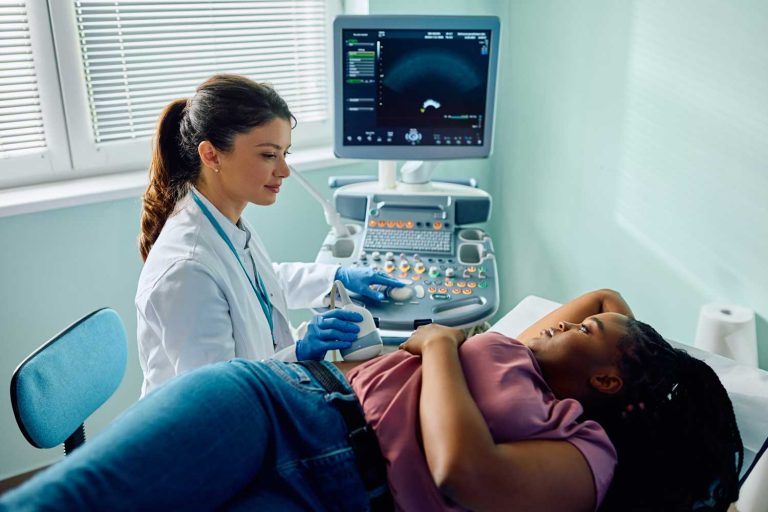
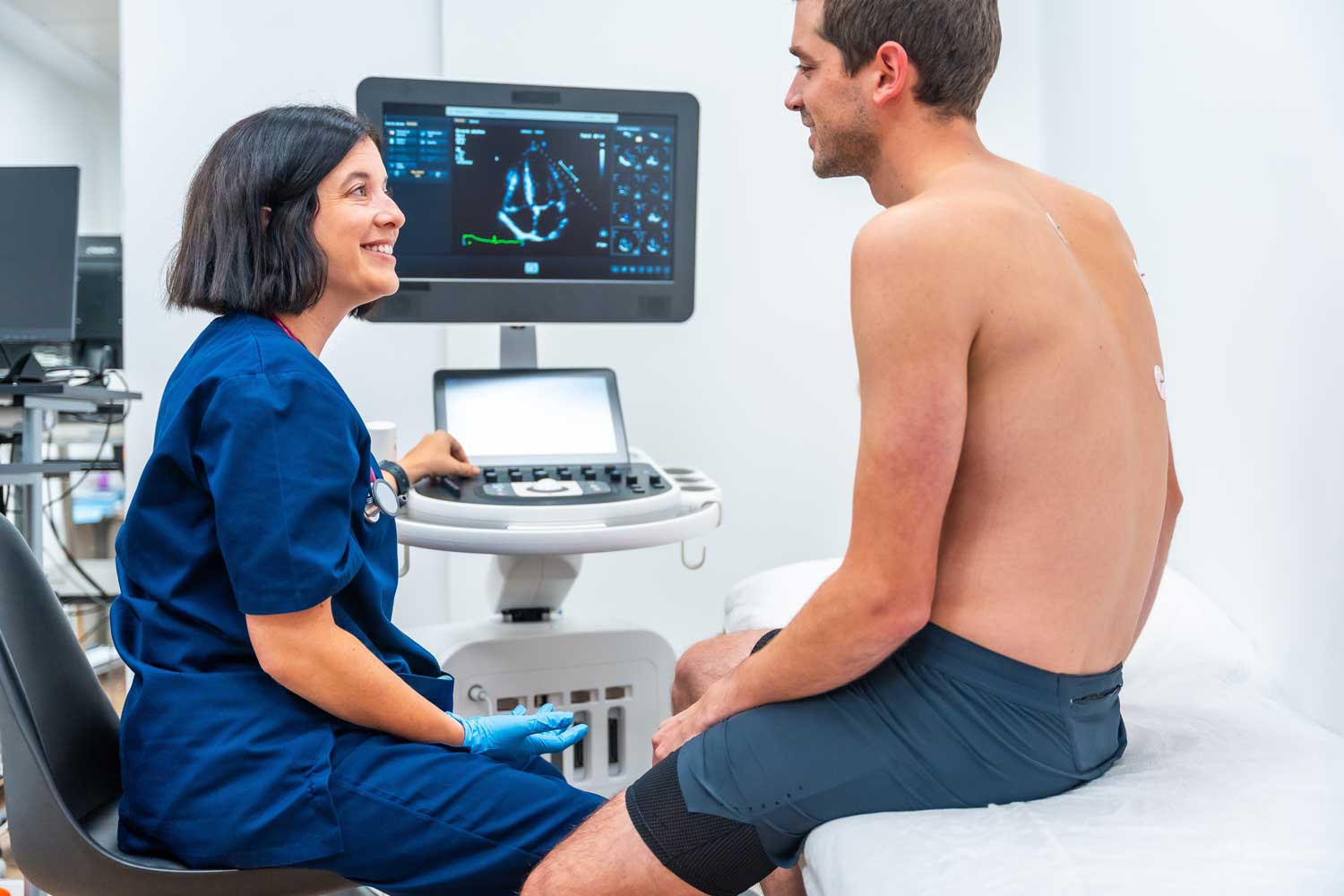
You’ll lie on your left side on an exam table — this position brings the heart closer to the chest wall and improves image quality. The sonographer applies a clear, water-based gel to your chest and places the transducer (a small hand-held device) at several positions on your chest, angling it to capture images from different views.
The transducer sends high-frequency sound waves that travel through your chest, bounce off your heart structures, and return as echoes. A computer converts these echoes into real-time moving images on a monitor — you can often see your own heart beating during the scan. You may hear a rhythmic “whooshing” sound during Doppler imaging; this is the sound of blood flowing through your heart’s valves and chambers.
The sonographer may ask you to breathe in, breathe out, or hold your breath briefly at certain points to improve image clarity. The exam is completely painless — you may feel light pressure from the transducer, but nothing uncomfortable.
A standard echocardiogram typically takes 30 to 60 minutes. There is no recovery time — you can eat, drive, and return to all normal activities immediately afterward.
After Your Echocardiogram: Results and Next Steps
After your exam, a board-certified cardiologist at IPMC reviews all the images, makes measurements, and prepares a comprehensive report — covering ejection fraction, wall motion, valve function, and any structural findings. Results are sent directly to your referring physician, who will explain the findings and discuss any recommended follow-up or treatment.
Depending on the findings, your doctor may recommend:
- Reassurance that your heart structure and function are normal
- A repeat echocardiogram in the future to monitor a known condition
- A stress echocardiogram or stress test if further evaluation of blood flow under exercise is needed
- Additional imaging — such as a cardiac MRI or CT angiography — for more detailed structural evaluation
- Cardiology follow-up or referral based on specific findings
Cardiology at IPMC
Why Choose IPMC for Your Echocardiogram in Philadelphia?
Cardiac Sonographers and Board-Certified Cardiologists
Every echocardiogram at IPMC is performed by an experienced cardiac sonographer and interpreted by a board-certified cardiologist. Meet our cardiologists. Detailed reports — including ejection fraction measurements and valve assessments — are sent promptly to your referring physician.
Full Range of Cardiac Studies in One Location
IPMC offers standard echocardiography, stress echocardiography, stress testing, and pharmacological stress testing — all under one roof in Northeast Philadelphia.
No Radiation, No Discomfort
Echocardiography uses only sound waves. There is no radiation, no contrast dye for a standard TTE, no injections, and no recovery time — making it one of the most patient-friendly cardiac tests available.
Convenient Location and Flexible Hours
Located at 9908 E. Roosevelt Blvd. in Northeast Philadelphia with onsite parking. Open Monday–Friday, 8AM–8PM. We accept most major insurance plans.
Schedule Your Echocardiogram at IPMC in Philadelphia
If your doctor has recommended an echocardiogram in Philadelphia, IPMC provides expert cardiac imaging in a comfortable, private outpatient setting — with results sent directly to your cardiologist or referring physician.
- Call 215-464-3300 to schedule your appointment.
- Visit us at 9908 E. Roosevelt Blvd., Philadelphia, PA 19115.
At Independent Physicians Medical Center, we believe cardiac care should be personal, efficient, and comfortable — giving you peace of mind and the answers your heart deserves.