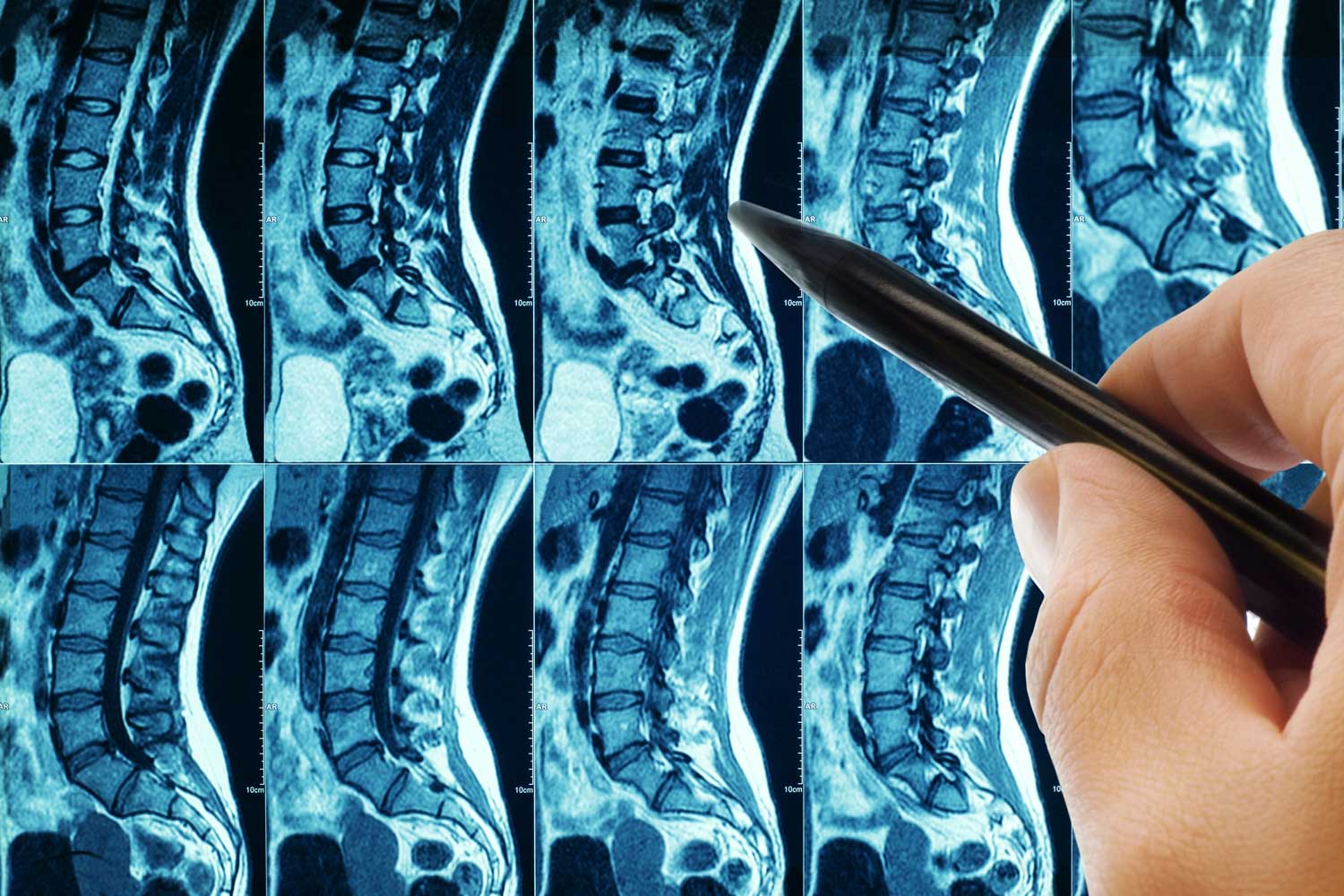
When your doctor needs a detailed look at the bones and structures of your lower back, a lumbar spine CT scan provides fast, precise imaging that can identify fractures, spinal stenosis, disc problems, tumors, and other conditions affecting the lumbar vertebrae. While MRI is often the preferred test for soft tissue evaluation, a lumbar CT scan excels at showing bony detail and is frequently used when an MRI is not available or appropriate.
At Independent Physicians Medical Center (IPMC) in Northeast Philadelphia, we offer lumbar spine CT imaging with our advanced Siemens scanner in a comfortable outpatient setting.
What Is a Lumbar Spine CT Scan?
A lumbar spine CT scan creates detailed cross-sectional images of the five lumbar vertebrae (L1 through L5), the sacrum, the intervertebral discs, the spinal canal, the facet joints, and the surrounding bony structures. It provides excellent visualization of bone, making it the preferred test for evaluating fractures, bony spinal stenosis, spondylolisthesis, post-surgical hardware, and other skeletal abnormalities.
The scan can also provide useful information about disc herniations, calcifications, and the overall alignment of the spine, though MRI remains superior for detailed evaluation of the spinal cord, nerve roots, and soft tissues.
Why Would Your Doctor Order a Lumbar Spine CT Scan?
Your doctor may recommend this test to evaluate:
- Fractures of the lumbar vertebrae, including compression fractures (common in osteoporosis), burst fractures, and traumatic fractures from falls or accidents
- Spinal stenosis — narrowing of the spinal canal or the bony openings (foramina) where nerves exit, which can compress the spinal cord or nerve roots
- Spondylolisthesis — forward slippage of one vertebra over another, which CT can show along with any associated bony defect (pars defect or spondylolysis)
- Degenerative disc disease and facet joint arthritis — including bone spurs (osteophytes), disc space narrowing, and joint hypertrophy
- Post-surgical evaluation — checking the position and integrity of spinal hardware (rods, screws, cages) after fusion or decompression surgery
- Bone tumors or metastases affecting the lumbar spine
- Infections such as vertebral osteomyelitis or discitis
- Pre-surgical planning for spinal procedures
- When MRI is contraindicated — for example, in patients with certain pacemakers or metal implants that are not MRI-compatible
- CT myelography — a specialized technique where contrast dye is injected into the spinal canal before CT scanning, providing excellent visualization of nerve compression in patients who cannot have an MRI
How to Prepare and What to Expect
Preparation is minimal. You’ll wear comfortable clothing and remove any metal objects near your back. If contrast dye is ordered, you may be asked to fast and to disclose allergies or kidney problems.
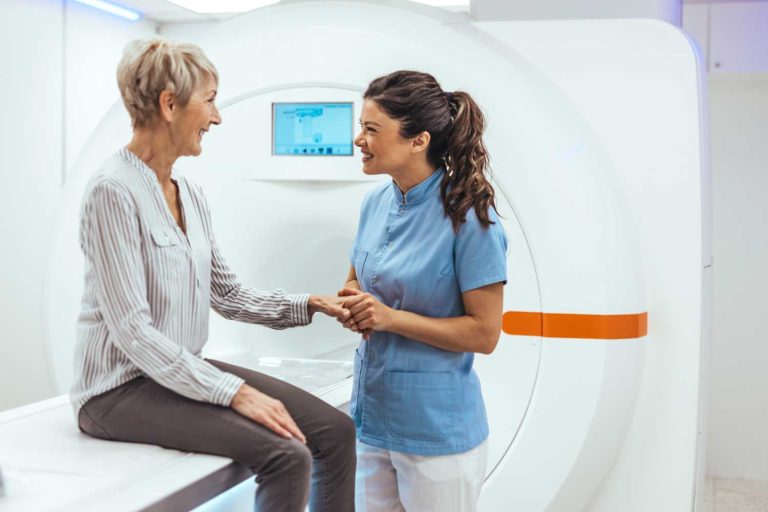
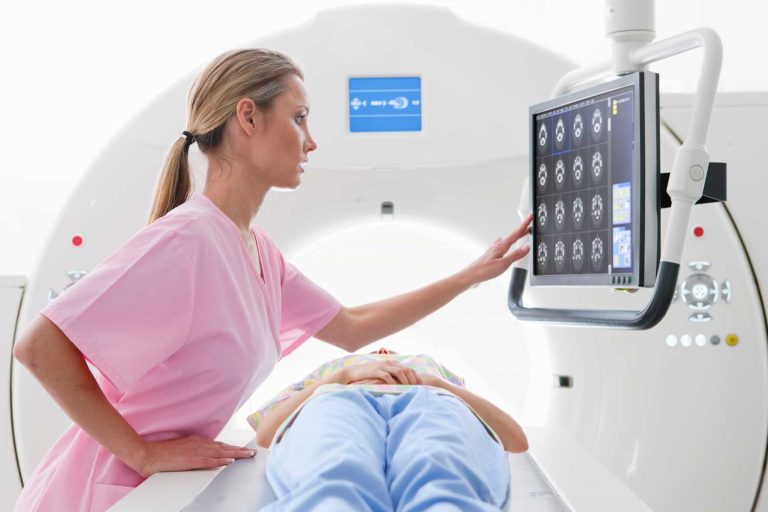
You’ll lie on your back on a padded table. The table slides through the CT scanner, and the technologist may use pillows or straps to help you stay in the correct position. You may be asked to hold your breath briefly. The scan itself takes only about 10 to 15 minutes, with the full appointment lasting 20 to 45 minutes.
After the scan, you can go about your day normally. A board-certified radiologist will analyze the images and send a report to your referring physician.
CT Scan at IPMC
Why Choose IPMC for Your CT Scan in Philadelphia?
Convenient Location and Flexible Hours
Fast Appointments & Quick Results
Comfortable Outpatient Setting
Avoid the stress of a hospital visit. Our welcoming center is designed for efficiency and patient comfort
Experienced, Board-Certified Physicians
Your imaging is reviewed by experienced professionals dedicated to accuracy and personalized care.
Schedule Your CT Scan Today
If your physician has recommended a CT scan, IPMC is here to provide reliable, high-quality imaging close to home in Northeast Philadelphia.
- Call 215-464-3300 to book your appointment.
- Visit us at 9908 E. Roosevelt Blvd., Philadelphia, PA 19115
At Independent Physicians Medical Center, we believe medical care should be personal, efficient, and focused on you—starting with your imaging experience.