A cranial CT scan is one of the fastest and most valuable imaging tests available for evaluating problems inside the head. In just minutes, it can produce detailed pictures of the skull, brain, sinuses, eye sockets, and surrounding structures — providing critical information that can guide life-saving decisions in emergencies and help diagnose a wide range of conditions in non-urgent settings.
At Independent Physicians Medical Center (IPMC) in Northeast Philadelphia, we offer fast, high-quality cranial CT imaging with our advanced Siemens scanner, experienced technologists, and board-certified radiologists in our convenient outpatient facility.
What Is a Cranial CT Scan?
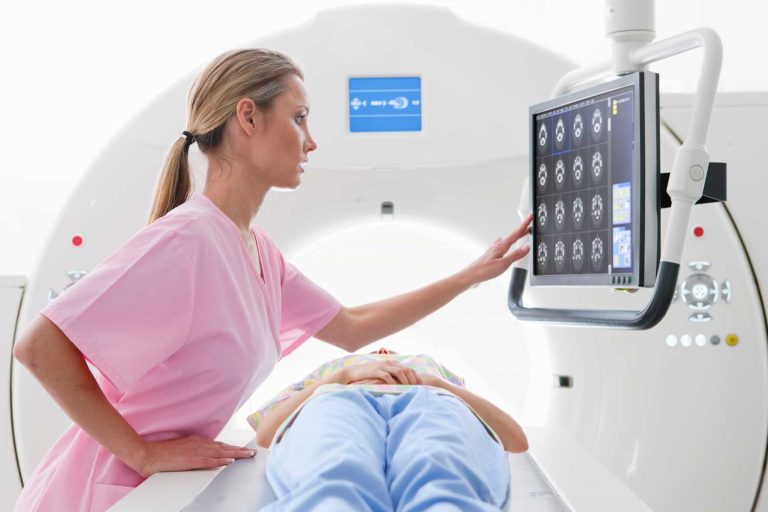
A cranial CT scan — also known as a head CT, brain CT, or skull CT — uses a rotating X-ray beam and computer processing to create detailed cross-sectional images of your head. The scanner takes a series of X-ray images from different angles and assembles them into layered “slices” that reveal the brain tissue, skull bones, blood vessels, fluid-filled spaces (ventricles), sinuses, and the membranes covering the brain (meninges).
A cranial CT is far more detailed than a standard skull X-ray and is much faster than an MRI, which makes it the preferred first-line imaging test in many clinical situations — particularly emergencies. The entire scan can be completed in as little as 5 to 10 minutes.
Why Would Your Doctor Order a Cranial CT Scan?
There are many reasons your doctor or an emergency physician might order a cranial CT:
- Head injury or trauma. CT is the go-to test after a fall, car accident, or blow to the head. It can rapidly detect skull fractures, bleeding inside the skull (intracranial hemorrhage), brain contusions (bruising), and swelling
- Suspected stroke. In the emergency setting, a CT scan is performed urgently to determine whether a stroke is caused by a blood clot (ischemic) or by bleeding (hemorrhagic), because the treatment is very different for each type. Speed is critical — the phrase “time is brain” reflects the need for rapid imaging
- Severe or unusual headaches. Sudden, severe headaches (“the worst headache of my life”) may indicate a ruptured brain aneurysm (subarachnoid hemorrhage) and require emergent CT. Chronic, worsening, or unusual headaches may also warrant imaging to rule out tumors, hydrocephalus, or other structural causes
- A first-time seizure or a change in seizure pattern often prompts a CT scan to look for a structural cause such as a tumor, bleeding, or infection
- Changes in mental status. Confusion, altered consciousness, or sudden behavioral changes may indicate bleeding, infection, or a mass in the brain
- Suspected brain tumor. CT can detect most brain tumors, though MRI is typically used for more detailed evaluation afterward
- Signs of brain infection. CT can show brain abscesses, meningitis-related complications, and encephalitis
- Sinus evaluation. CT provides excellent detail of the sinus cavities and is used to evaluate chronic sinusitis, polyps, and sinus anatomy before surgery
- CT can detect enlargement of the brain’s ventricles, which indicates a buildup of cerebrospinal fluid
- Pre-surgical planning. CT may be used to plan neurosurgical or ENT procedures
- Follow-up. After brain surgery, a stroke, or treatment for a brain condition, CT is used to monitor for complications or changes
How to Prepare for a Cranial CT Scan
Preparation is minimal:
Metal objects. Remove eyeglasses, earrings, hearing aids, hairpins, dentures, and any other metal objects from your head and neck area. These can interfere with image quality.
Clothing. You may be asked to change into a gown, particularly if your clothing has metal near the head or neck.
Contrast dye. Some cranial CT scans are performed with IV contrast dye to better visualize blood vessels, tumors, or areas of infection. If contrast is being used, you may be asked to fast for a few hours beforehand. Tell your doctor about any allergies to contrast dye, iodine, or shellfish, and about any kidney problems.
Medications. You can usually take your medications as normal unless your doctor says otherwise.
Sedation. If you have difficulty lying still (due to pain, anxiety, or claustrophobia), your doctor may recommend a mild sedative. If you receive sedation, arrange for someone to drive you home. For children, sedation is sometimes necessary to prevent movement during the scan.
What Happens During the Scan?
A cranial CT scan is one of the quickest imaging tests available:
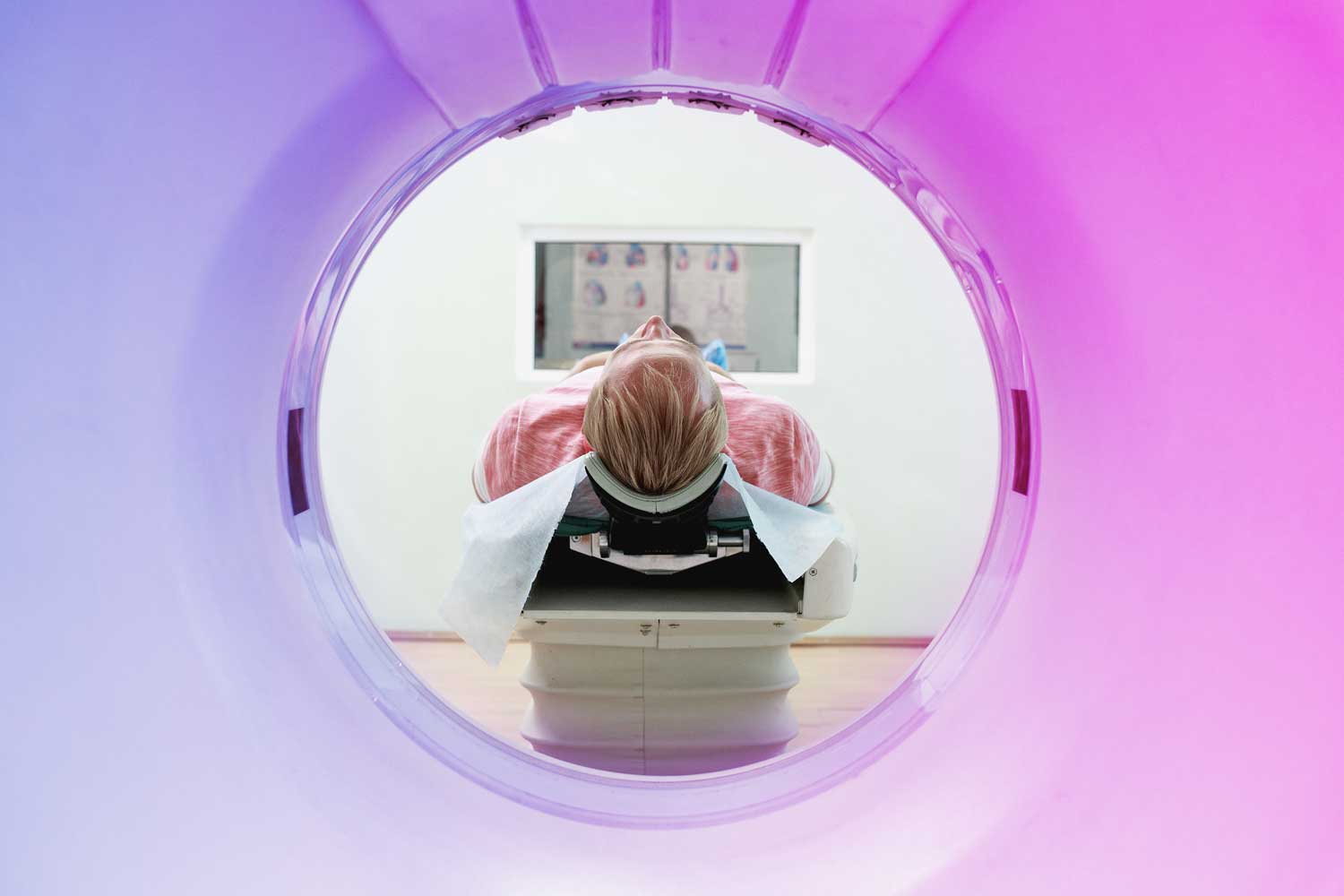
- Positioning. You’ll lie on a padded table, either face-up or face-down depending on the reason for the scan. Your head may be placed in a cushioned holder to keep it still.
- Entering the scanner. The table slides so your head moves into the CT scanner, which looks like a large ring. Only your head is inside the ring — your body remains outside, which most patients find much less confining than an MRI.
- The scan. The scanner rotates around your head, taking X-ray images from many angles. You may hear a soft whirring or clicking sound. You’ll need to stay completely still for the duration of the scan — even small movements can blur the images. The technologist may ask you to hold your breath briefly.
- Contrast injection (if used). If IV contrast is needed, it will be injected through an IV in your arm during the scan. You may feel a brief warm sensation or metallic taste.
- Duration. The scan itself takes only about 5 to 15 minutes. If contrast is used, the appointment may take 30 to 45 minutes total including preparation.
- Communication. The technologist will be in a nearby room, watching through a window, and can communicate with you through a speaker system at all times.
Understanding Your Cranial CT Results
A board-certified radiologist at IPMC will review every image and prepare a report for your doctor. Key findings the radiologist looks for include:
Bleeding (hemorrhage). Fresh blood appears bright white on CT, making it easy to detect. The radiologist identifies the type and location of bleeding — epidural, subdural, subarachnoid, or intraparenchymal (within the brain tissue) — which is critical for guiding treatment.
Stroke. Early signs of ischemic stroke (caused by a clot) include subtle loss of the normal gray-white matter distinction and swelling. Hemorrhagic stroke shows as a bright area of bleeding. CT angiography (CTA) can also show the exact location of a blocked blood vessel.
Fractures. CT provides excellent detail of the skull bones and can detect fractures that are invisible on standard X-rays, including linear fractures, depressed fractures, and basilar skull fractures.
Masses and tumors. Brain tumors appear as areas of abnormal density that may enhance (light up) with contrast dye. CT can identify the size, location, and mass effect (pressure on surrounding brain structures).
Hydrocephalus. Enlarged ventricles indicate excess cerebrospinal fluid.
Sinus disease. Fluid levels, mucosal thickening, polyps, and anatomical variants in the sinuses are documented.
Midline shift. Any displacement of the brain’s midline structures suggests mass effect from bleeding, swelling, or a tumor and may indicate a surgical emergency.
After Your Cranial CT Scan
You can return to your normal routine immediately unless you received sedation (in which case you’ll need someone to drive you home). Results are typically available quickly — in emergency situations, a radiologist may provide a preliminary reading within minutes. For outpatient scans, results are usually sent to your doctor within 24 to 48 hours.
Depending on the findings, your doctor may recommend additional imaging (such as an MRI for further brain detail), referral to a neurologist, neurosurgeon, or ENT specialist, treatment for the identified condition, or reassurance that everything looks normal.
CT Scan at IPMC
Why Choose IPMC for Your CT Scan in Philadelphia?
Convenient Location and Flexible Hours
Fast Appointments & Quick Results
Comfortable Outpatient Setting
Avoid the stress of a hospital visit. Our welcoming center is designed for efficiency and patient comfort
Experienced, Board-Certified Physicians
Your imaging is reviewed by experienced professionals dedicated to accuracy and personalized care.
Schedule Your CT Scan Today
If your physician has recommended a CT scan, IPMC is here to provide reliable, high-quality imaging close to home in Northeast Philadelphia.
- Call 215-464-3300 to book your appointment.
- Visit us at 9908 E. Roosevelt Blvd., Philadelphia, PA 19115
At Independent Physicians Medical Center, we believe medical care should be personal, efficient, and focused on you—starting with your imaging experience.