When your doctor needs a closer look at your prostate — whether because of elevated PSA, an abnormal exam, or a prostate cancer diagnosis — a prostate MRI scan provides the most detailed imaging available. If you’re searching for a prostate MRI in Philadelphia, IPMC offers advanced multiparametric MRI (mpMRI) in a private, comfortable outpatient setting in Northeast Philadelphia.
What Is a Prostate MRI?
A prostate MRI uses strong magnets and radio waves to create detailed images of the prostate gland, surrounding tissues, seminal vesicles, and nearby lymph nodes. A multiparametric MRI (mpMRI) combines several different types of imaging sequences — including T2-weighted imaging, diffusion-weighted imaging (DWI), and dynamic contrast-enhanced (DCE) imaging — to provide the most comprehensive view of the prostate possible.
This combination of techniques allows radiologists to identify areas within the prostate that look suspicious for clinically significant cancer. Results are reported using a standardized scoring system called PI-RADS (Prostate Imaging Reporting and Data System), which rates findings on a scale from 1 (highly unlikely to be cancer) to 5 (highly likely to be cancer).
Why Would Your Doctor Order a Prostate MRI?
Your doctor may recommend a prostate MRI if you have:
- Elevated or rising PSA (prostate-specific antigen) levels that raise concern for prostate cancer
- An abnormal digital rectal exam (DRE) with a suspicious lump or area of firmness
- A previous prostate biopsy that was negative or inconclusive, but clinical suspicion for cancer remains
- A newly confirmed prostate cancer diagnosis that requires staging to determine how far the cancer has spread
- A need for MRI-guided or MRI/ultrasound fusion biopsy targeting — MRI helps direct the biopsy needle to the most suspicious areas, improving accuracy compared to random biopsy
- Active surveillance for low-risk prostate cancer — MRI helps monitor for any changes that might indicate the cancer is becoming more aggressive
- Symptoms such as difficulty urinating, weak urine stream, frequent urination, or pelvic pain that may have multiple causes
- Planning for treatment, whether surgery (prostatectomy), radiation therapy, or focal therapy

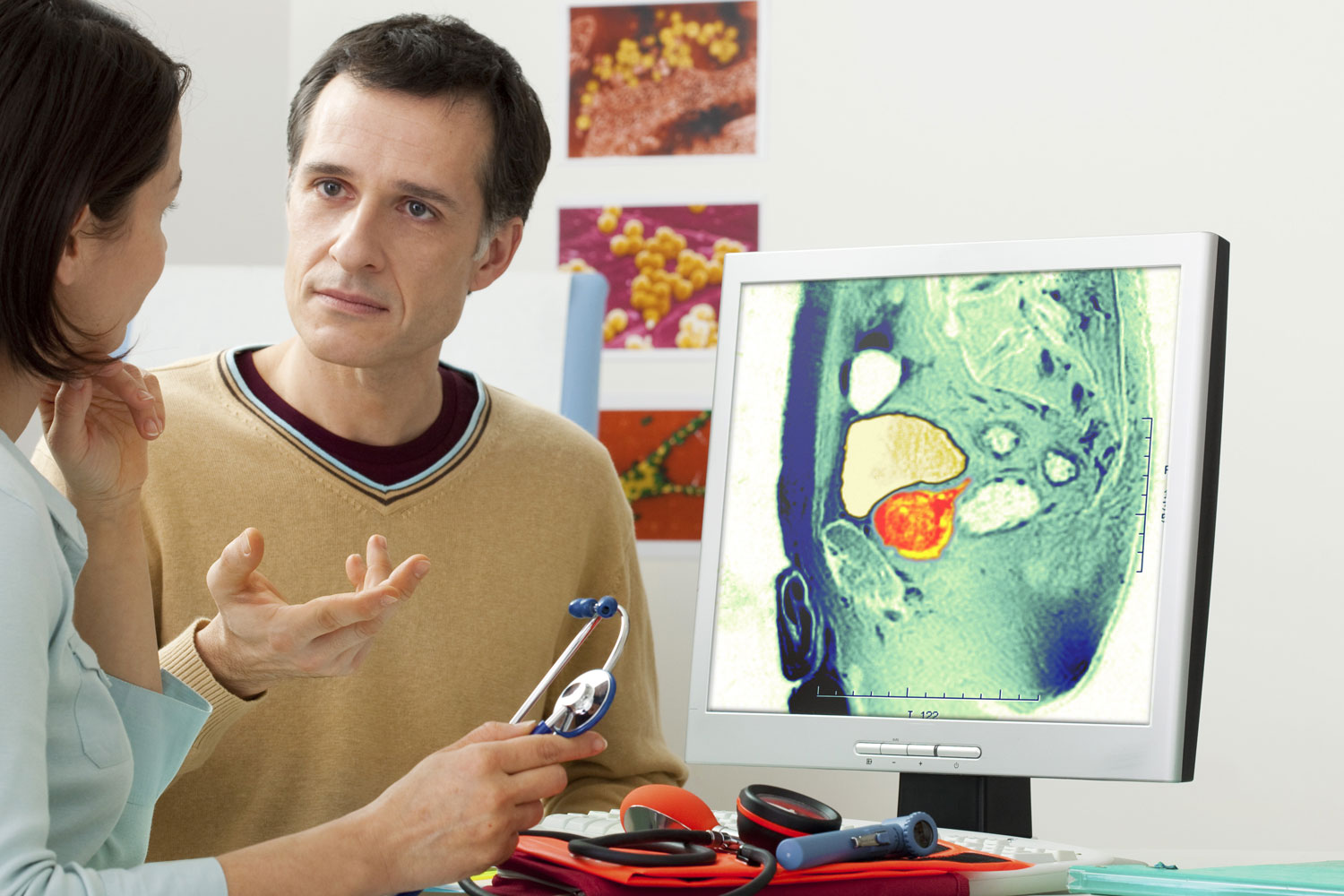
Prostate MRI scan showing enlarged prostate gland for cancer diagnosis
How to Prepare for Your Prostate MRI
Bowel preparation. Your doctor may recommend a small enema (Fleet enema) the morning of the exam to clear the rectum. This reduces gas and rectal motion that can degrade image quality. Follow any specific instructions from your doctor’s office.
Ejaculation restriction. You may be advised to avoid ejaculation for 48 to 72 hours before the scan. Prostatic fluid changes following recent ejaculation can alter the appearance of glandular tissue on certain MRI sequences.
Metal safety and medications. Remove all metal objects. Inform your care team of any pacemakers, implants, or surgical hardware. You can generally eat, drink, and take your medications as usual unless instructed otherwise.
Contrast dye. A gadolinium contrast agent is typically administered through an IV. Let your doctor know about any allergies or kidney problems beforehand.
What Happens During a Prostate MRI
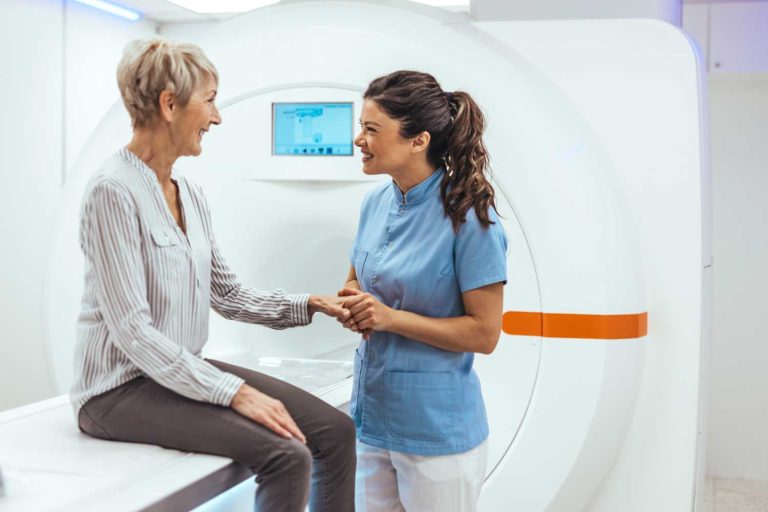
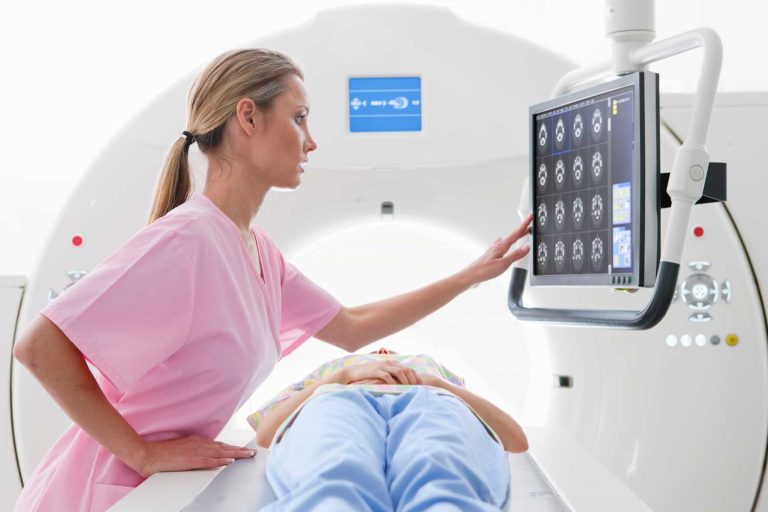
You’ll lie on your back on a cushioned table. A coil is placed over your pelvis to maximize image quality. The table slides into the MRI machine and the scan begins. You’ll hear rhythmic tapping and humming sounds — ear protection is provided. A technologist communicates with you through an intercom throughout.
The multiparametric protocol captures several different types of sequences — T2-weighted images show prostate anatomy in detail, diffusion-weighted imaging (DWI) highlights areas of restricted cell movement that may suggest cancer, and dynamic contrast-enhanced (DCE) imaging tracks how contrast moves through the tissue. Together, these sequences give your radiologist a comprehensive picture of the prostate.
The scan typically takes 30 to 45 minutes. There is no recovery time — you can resume all normal activities immediately afterward.
Understanding Your Prostate MRI Results
A board-certified radiologist at IPMC will carefully analyze all imaging sequences and prepare a detailed report using the PI-RADS (Prostate Imaging Reporting and Data System) scoring framework for your referring urologist or physician. Key findings include:
PI-RADS scoring. Each suspicious area is assigned a score from 1 to 5. PI-RADS 1–2 are considered very unlikely or unlikely to represent clinically significant cancer. PI-RADS 3 is equivocal. PI-RADS 4–5 are considered likely or highly likely to be clinically significant cancer, typically prompting targeted biopsy.
Zonal anatomy. The radiologist evaluates the peripheral zone (where most prostate cancers arise), the transition zone (more associated with BPH but also a site of cancer), and the central zone. The location of any suspicious lesion influences biopsy approach and treatment planning.
Extracapsular extension. For known cancer cases, the report documents whether the tumor appears confined to the prostate or has spread beyond the capsule into surrounding tissue — a critical staging distinction.
Seminal vesicle involvement. The seminal vesicles are assessed for signs of direct tumor invasion, which affects staging and treatment decisions.
Lymph node assessment. Pelvic lymph nodes are evaluated for enlargement that may suggest metastatic spread.
Benign findings. BPH (benign prostatic hyperplasia), prostatitis, and post-biopsy hemorrhage are also identified and documented, as they can mimic or obscure cancer on imaging.
Follow-Up After Your Prostate MRI
There is no downtime after your scan. You can eat, drive, and resume all normal activities right away.
Depending on your PI-RADS scores and clinical context, your urologist may recommend continued active surveillance with repeat PSA testing and annual mpMRI, an MRI-targeted or MRI/ultrasound fusion biopsy of suspicious areas, systematic plus targeted biopsy, or treatment planning for confirmed cancer including surgery, radiation, or focal therapy.
At IPMC, we prioritize rapid turnaround so your urologist has the information needed to guide your next steps without delay.