At Independent Physicians Medical Center (IPMC) in Northeast Philadelphia, we make your pelvic MRI as comfortable and private as possible in our outpatient facility, with experienced technologists and board-certified radiologists ensuring the highest quality imaging and interpretation.
What Is a Pelvic MRI?
A pelvic MRI uses strong magnets and radio waves to create highly detailed cross-sectional images of the internal structures in your pelvic area. Unlike X-rays and CT scans, MRI does not use ionizing radiation, making it a particularly safe choice for repeated imaging and for patients who should limit radiation exposure.
The scan produces hundreds of high-resolution images that allow a radiologist to examine organs and tissues with extraordinary clarity. For women, a pelvic MRI provides detailed views of the uterus, ovaries, fallopian tubes, cervix, and vaginal walls. For men, it can examine the prostate gland, seminal vesicles, and surrounding tissues. In both sexes, the scan is excellent for evaluating the bladder, rectum, pelvic bones, muscles, lymph nodes, and pelvic floor.
Why Would Your Doctor Order a Pelvic MRI?
Your physician may recommend a pelvic MRI for a wide variety of reasons. This test is particularly valuable because of its superior ability to differentiate between types of soft tissue — something that CT scans and ultrasound often cannot do as precisely.
Common indications include:
- Unexplained pelvic pain or chronic hip pain that hasn’t been diagnosed with other tests
- Abnormal findings on a previous ultrasound, CT scan, or physical examination that need further evaluation
- Investigation of uterine fibroids — MRI is considered the most accurate imaging tool for mapping the number, size, and location of fibroids before treatment
- Evaluation of endometriosis, especially deep infiltrating endometriosis that may not be visible on ultrasound
- Cancer staging for cervical, uterine, ovarian, bladder, rectal, prostate, or testicular cancers — MRI helps doctors determine how far the cancer has spread and plan the most effective treatment
- Monitoring cancer treatment response or checking for recurrence after surgery, radiation, or chemotherapy
- Assessment of congenital uterine abnormalities in women with infertility or recurrent pregnancy loss
- Evaluation of a suspected anal fistula, perianal abscess, or rectal condition
- Investigation of pelvic masses or enlarged lymph nodes detected on other imaging
- Pre-surgical planning for complex gynecological, urological, or colorectal procedures
- Evaluation of pelvic floor disorders, including pelvic organ prolapse
A pelvic MRI is often the definitive imaging study that helps your doctor reach a confident diagnosis when other tests have been inconclusive.
How to Prepare for Your Pelvic MRI
Preparation for a pelvic MRI is straightforward, but there are a few important steps:
Fasting. You may be asked to avoid eating or drinking for four to six hours before your scan. This helps reduce bowel motion and gas, which can affect image quality. You can usually continue taking your regular medications with a small sip of water unless your doctor instructs otherwise.
Metal safety. As with all MRIs, you’ll need to remove all metal objects and inform your care team about any implants, pacemakers, or metal in your body. Complete the safety questionnaire carefully.
Contrast dye. Many pelvic MRIs use gadolinium contrast dye injected through an IV. Let your doctor know if you have any allergies to contrast agents or if you have kidney problems. For some specific pelvic exams, contrast may also be administered rectally or vaginally — your doctor will explain if this applies to you.
Bladder instructions. Depending on the reason for your scan, you may be asked to have a moderately full bladder (for gynecological studies) or an empty bladder. Our scheduling team will give you specific instructions.
Clothing. Wear comfortable, loose-fitting clothing without metal. You’ll likely change into a gown.
Claustrophobia. If you’re anxious about enclosed spaces, tell your doctor in advance so accommodations can be made.
What Happens During the Scan?
- Check-in. Our team will verify your information, review your health history, and have you complete the MRI safety screening form.
- Preparation. You’ll change into a gown and may have an IV placed if contrast dye will be used. You’ll lie on your back on a cushioned table.
- Coils and positioning. Small surface coils may be placed over your pelvic area to enhance image quality. These are lightweight and painless. In some cases, an endorectal coil (a small device inserted into the rectum) may be used for prostate imaging to get the clearest possible pictures.
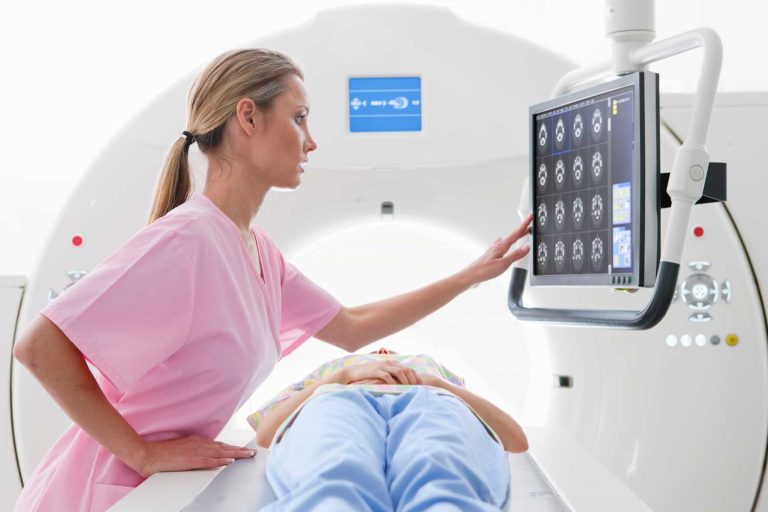
- The scan. The table slides into the MRI machine, and the scan begins. You’ll hear rhythmic tapping and humming sounds — ear protection will be provided. A technologist will communicate with you through an intercom throughout the entire procedure. You may be asked to hold your breath briefly at certain points to reduce motion.
- Contrast injection. If gadolinium is used, it will be injected partway through the scan, and additional images will be captured.
- Duration. A pelvic MRI typically takes 30 to 60 minutes, depending on the complexity of the exam. Some specialized protocols may take slightly longer.

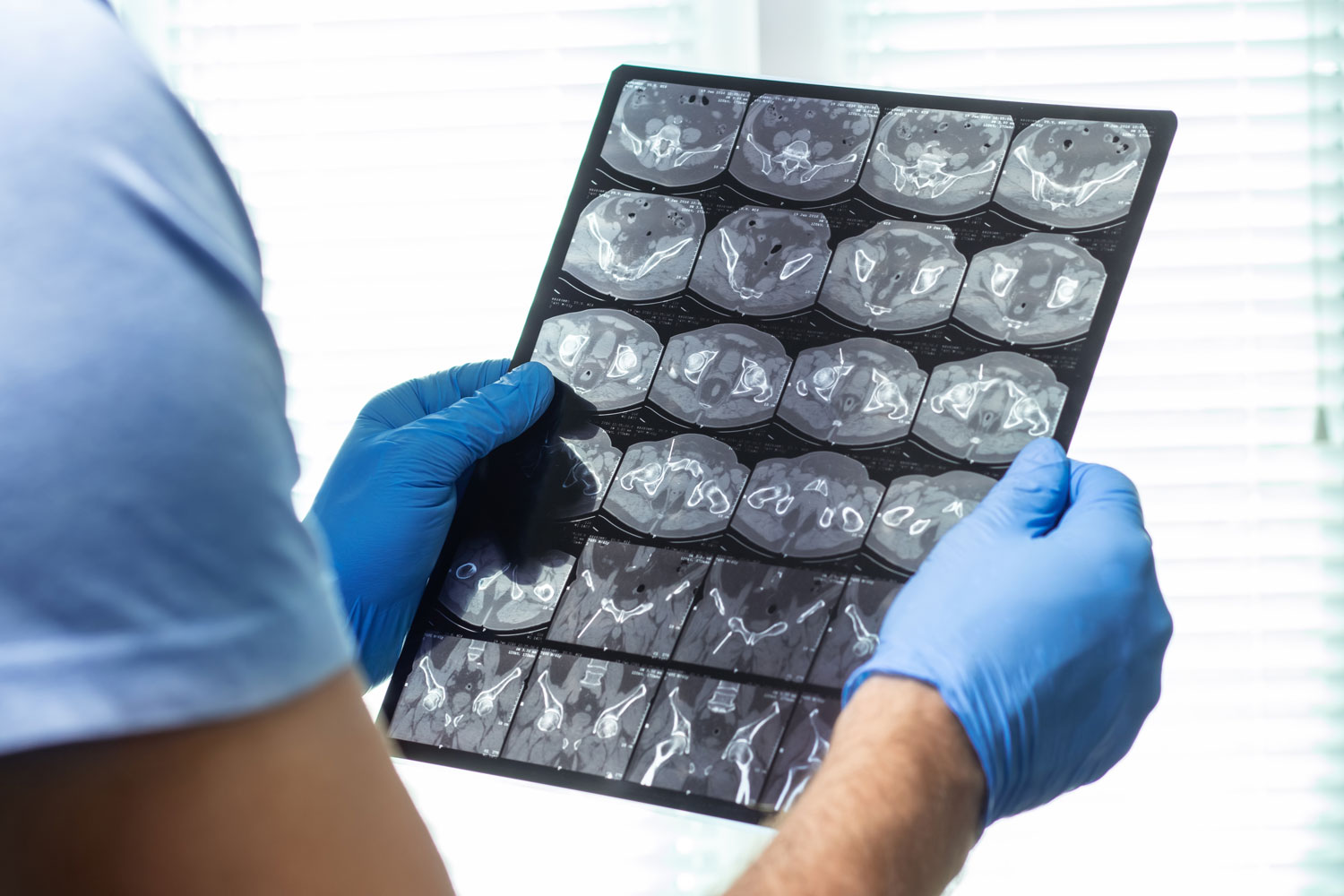
Pelvic MRI scan image used for gynecological and urological diagnosis
Understanding Your Pelvic MRI Results
A board-certified radiologist at IPMC will review every image and prepare a comprehensive report for your referring doctor. Here’s what the radiologist evaluates:
Organ size and structure. The radiologist checks whether the uterus, ovaries, prostate, bladder, and other organs are normal in size, shape, and position.
Masses and tumors. MRI can characterize masses as benign (such as fibroids, cysts, or adenomyosis) or suspicious for malignancy based on their signal characteristics, enhancement patterns, and borders.
Cancer staging. For patients with known cancer, the radiologist assesses tumor size, depth of invasion, involvement of surrounding structures, and lymph node status — all of which are critical for treatment planning.
Inflammatory conditions. Signs of endometriosis, pelvic inflammatory disease, abscesses, or fistulas can be identified and characterized.
Bone and soft tissue. The pelvic bones, sacroiliac joints, muscles, and nerves are also evaluated for fractures, degeneration, or other abnormalities.
Follow-Up After Your Pelvic MRI
There is no recovery time needed after a pelvic MRI. You can return to your normal diet, activities, and medications immediately. If contrast dye was used, drinking extra water is recommended to help your body flush the dye.
Based on the results, your doctor may recommend further testing (such as a biopsy), a referral to a specialist, a treatment plan, or simply continued monitoring with periodic imaging. Your doctor will discuss all findings and next steps with you.
At IPMC, we prioritize getting your results to your doctor quickly so that your care can proceed without unnecessary delays.