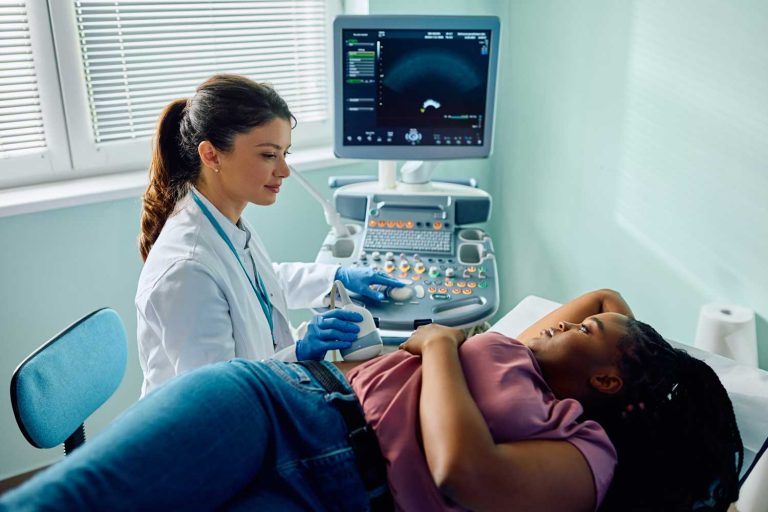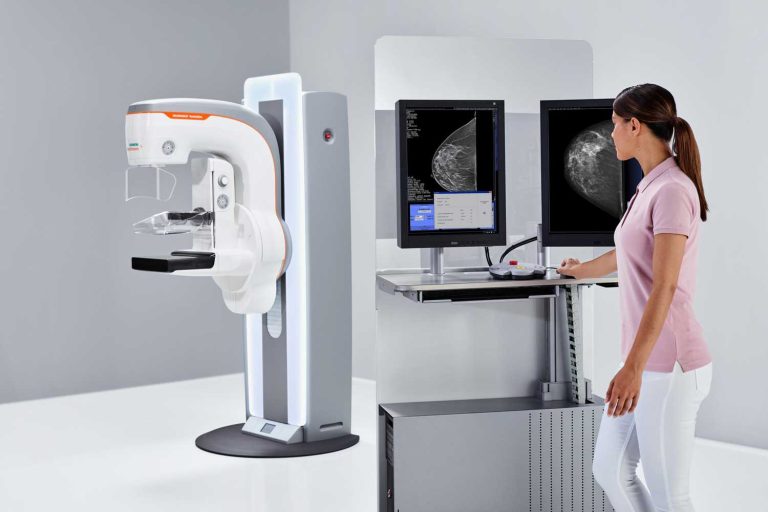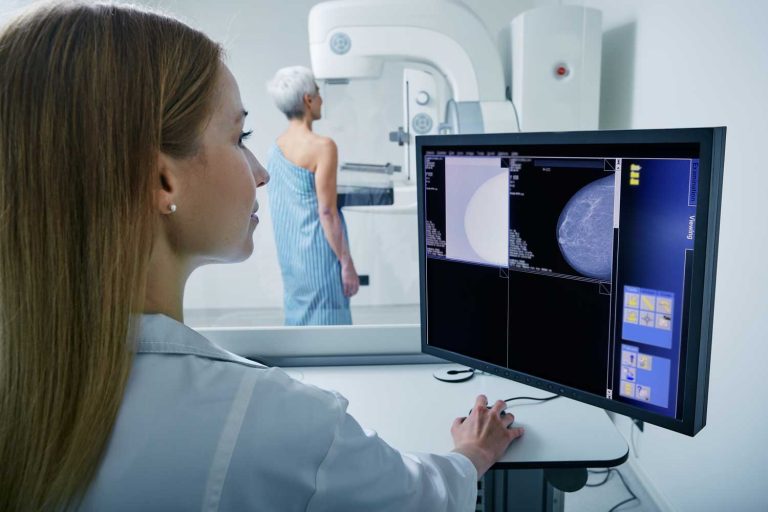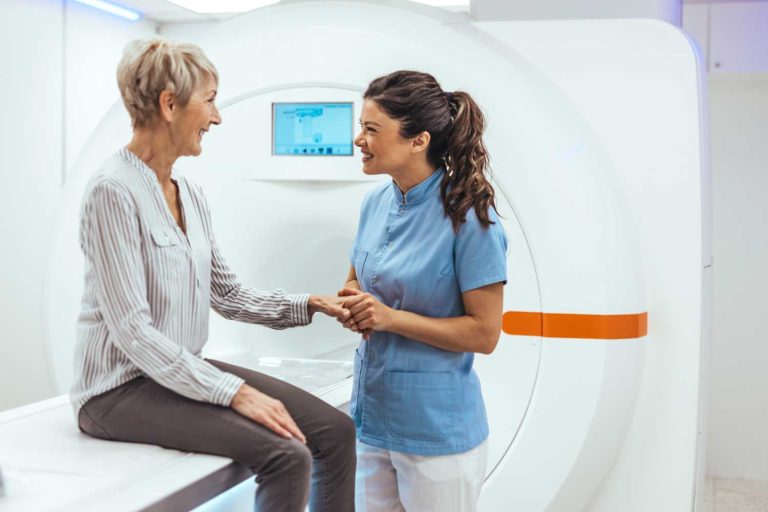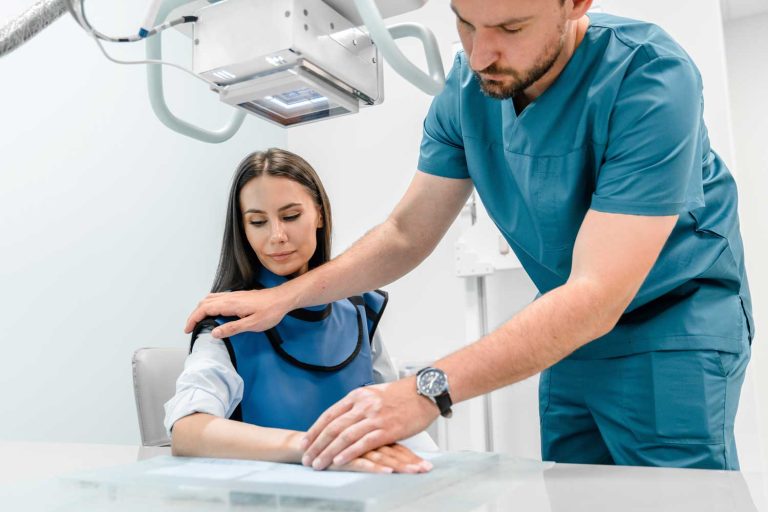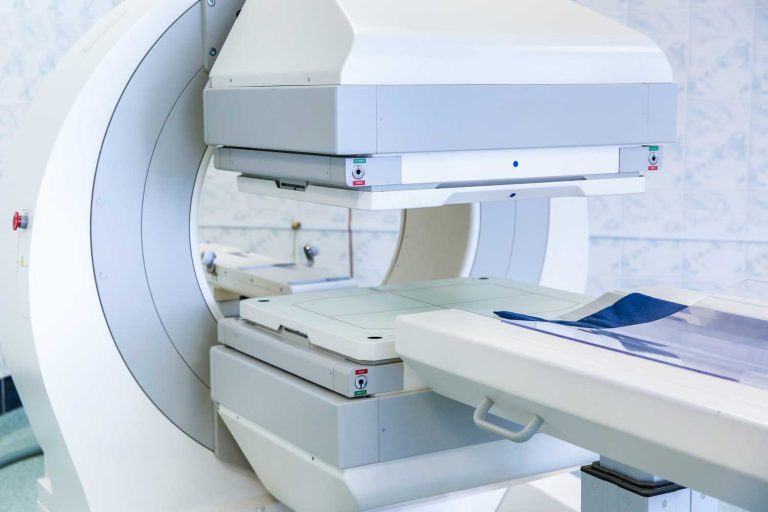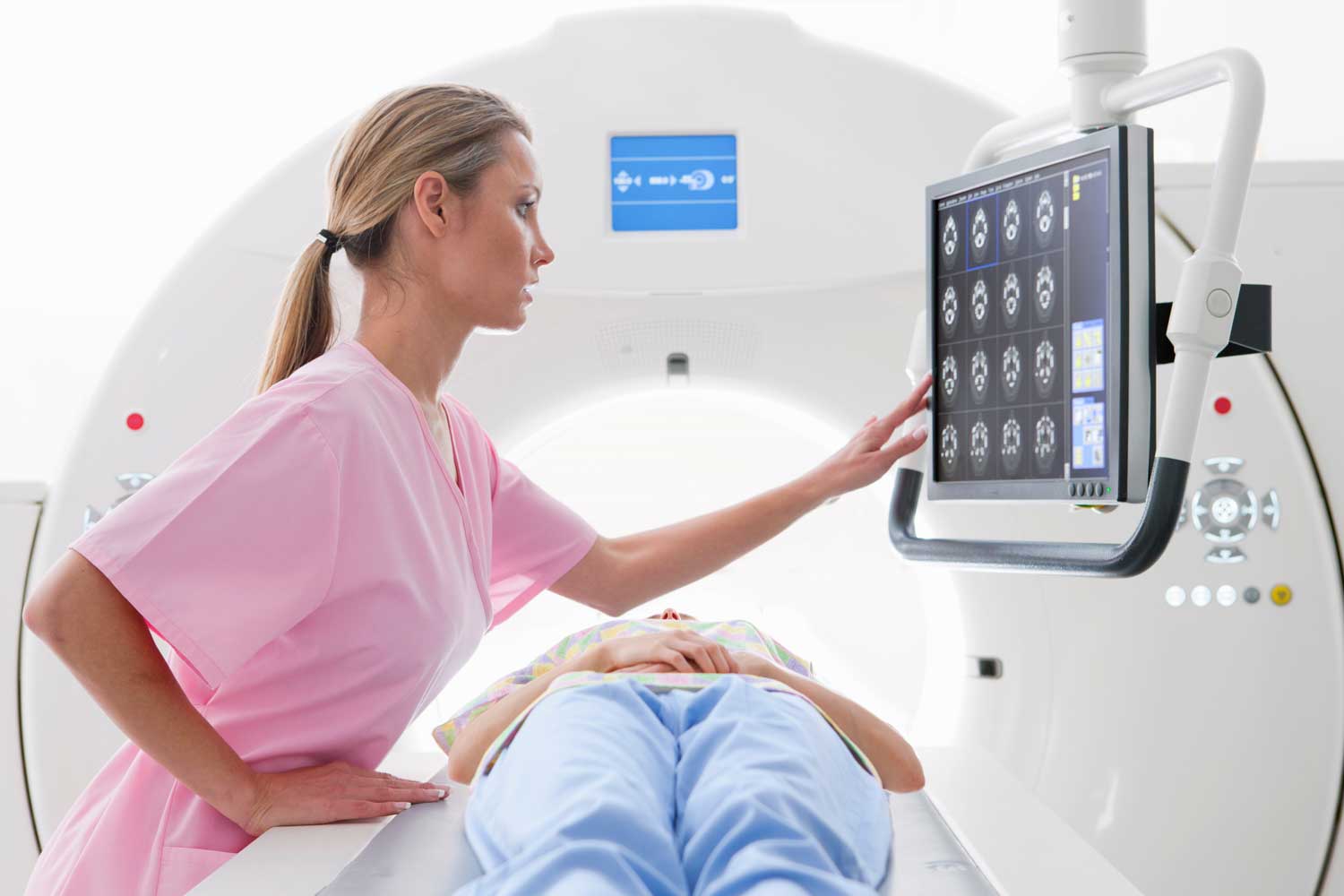
A CT scan — short for computed tomography, also called a CAT scan — is one of the most important and widely used imaging tools in modern medicine. It combines a series of X-ray images taken from many different angles and uses a computer to create detailed cross-sectional “slices” of your body. These images reveal bones, organs, blood vessels, and soft tissues far more clearly than a standard X-ray — and the entire scan is typically completed in just 5 to 15 minutes.
At Independent Physicians Medical Center (IPMC) in Northeast Philadelphia, we offer advanced CT scanning services — including a full range of CT and CTA studies — in a comfortable outpatient setting. If you’re looking for a CT scan in Philadelphia, our experienced team delivers high-quality imaging without the stress or wait times of a hospital visit.
What Is a CT Scan and How Does It Work?
CT stands for computed tomography. The scanner is a large, ring-shaped (donut-shaped) machine. You lie on a padded table that slides through the center of the ring while the scanner rotates around you, sending X-rays from dozens of different angles. A powerful computer captures all of these images and reconstructs them into detailed cross-sectional slices — and in some cases, full 3D models — of the area being examined.
The key difference from a standard X-ray is dimensionality: a conventional X-ray produces a single flat image, while a CT scan produces many layered slices that together give your doctor a complete, three-dimensional picture of the anatomy and any abnormalities present.
According to RadiologyInfo.org (published by the American College of Radiology), CT scans are painless, non-invasive, and accurate — making them one of the most valuable tools for rapid diagnosis across a wide range of clinical conditions.
What Can a CT Scan Diagnose?
CT scans are used across virtually every medical specialty. Your physician may recommend one to evaluate:
- Head and brain: Stroke, bleeding in the brain (hemorrhage), traumatic head injury, tumors, seizures, sinusitis, and sudden severe headache. CT is the first-choice imaging test in emergencies because of its speed. See our guide to head and brain CT scans.
- Chest and lungs: Pulmonary embolism (blood clot in the lung), pneumonia, emphysema, COPD, lung nodules, pleural effusion, and low-dose CT lung cancer screening for high-risk patients.
- Abdomen and pelvis: Appendicitis, kidney stones, bowel obstruction, pancreatitis, abdominal aortic aneurysm, and cancer staging of the liver, kidneys, colon, and other organs.
- Spine and bones: Vertebral fractures, disc problems, spinal tumors, and complex bone fractures not fully visible on X-ray.
- Blood vessels (CT angiography — CTA): Coronary artery disease, aortic dissection, carotid artery stenosis, and pulmonary artery clots. CTA produces detailed images of blood vessels using IV contrast dye.
- Cancer staging and treatment monitoring: Determining the size and spread of tumors, checking lymph node involvement, and tracking response to chemotherapy or radiation.
- Trauma and emergencies: CT is often the first imaging test ordered after serious accidents because it is fast, comprehensive, and immediately available.
For a complete list of CT studies available at IPMC, see our types of CT and CTA scan guide.
CT Scan vs. MRI: Which One Does Your Doctor Order — and Why?
CT and MRI are both cross-sectional imaging tests, but they work differently and excel in different situations. Understanding the difference helps you know what to expect:
- CT is faster (5–15 min vs. 20–60 min for MRI) — making it the preferred choice in emergencies and for patients who cannot stay still for long.
- CT is better for bone detail, lung imaging, bleeding in the brain, trauma, and rapid cancer staging.
- MRI is better for soft tissue detail — brain tumors, spinal cord problems, joint injuries, liver lesions, and prostate cancer — because it produces superior contrast between different tissue types.
- CT uses low-to-moderate radiation; MRI uses none.
- CT is quieter and less confining — the ring is shorter and wider than an MRI tube, and scans take a fraction of the time.
Often the two tests are complementary — a CT scan may be done first for speed, followed by an MRI for more detailed evaluation. For a full comparison, see: CT Scan vs. MRI: What’s the Difference and Which Is Right for You?
How to Prepare for Your CT Scan at IPMC
Preparation depends on the type of CT scan ordered. Some require no preparation at all; others involve contrast dye that must be taken orally or given through an IV. Our full CT scan preparation guide has exam-specific instructions. Here are the key points:
- No contrast needed. You can eat, drink, and take medications normally. CT scans of the sinuses, bones, and extremities typically require no preparation.
- IV contrast (iodine dye). You may be asked to fast for 4 hours before the scan. Inform your team if you have kidney problems, diabetes, or a history of contrast reactions. Drink plenty of water before and after to help flush the dye.
- Oral contrast (barium). Required for some abdominal scans. You will pick up barium from our facility in advance and drink it according to a timed schedule — usually starting the evening before or the morning of the exam. See our barium preparation instructions.
- Clothing and metal. Wear comfortable clothing without metal zippers or snaps. Remove jewelry, glasses, and hearing aids before the scan. The technologist will guide you through what to remove.
Always bring your prescription or referral and any prior imaging studies to your appointment. If you have diabetes and take certain medications (such as metformin), ask your doctor whether you need to pause them around the time of a contrast scan.
What Happens During a CT Scan at IPMC?
- Check-in. Our team verifies your information and any contrast requirements, and places an IV line if contrast dye will be used.
- Positioning. You lie on a cushioned table on your back. The technologist positions you and may place pillows or straps to help you stay still and comfortable.
- Entering the scanner. The table slides into the ring-shaped CT scanner. Unlike an MRI, only a small portion of your body is inside the ring at any time — most patients find this much more comfortable. Your head typically remains outside for body scans.
- The scan. The scanner rotates quietly around you, taking X-ray images from many angles. You may hear a soft hum or whirring sound. The technologist may ask you to hold your breath briefly for 5–15 seconds to reduce motion blur — this is especially important for chest and abdominal scans.
- Contrast injection (if applicable). IV contrast is injected automatically through your IV during the scan. You may briefly feel a warm flush or a metallic taste in your mouth — this is normal and passes within seconds.
- Duration. Most CT scans take 5 to 15 minutes. If contrast is used or multiple phases are captured, the appointment may last 30 to 45 minutes in total.
There is no recovery time. You can eat, drive, and resume all normal activities immediately after your scan. If contrast dye was used, drink extra water throughout the day to help flush it from your system.
Is a CT Scan Safe? Understanding Radiation
CT scans use ionizing radiation — more than a standard X-ray, but far less than you might expect. Modern CT scanners use optimized low-dose protocols that minimize exposure while still producing clear, diagnostic-quality images. For most adults, the benefit of an accurate diagnosis far outweighs the small radiation risk from a single CT scan.
Key safety points:
- The radiation dose from a CT scan is typically equivalent to a few months to a couple of years of natural background radiation.
- CT is generally avoided in pregnant women unless medically necessary, and shielding is used when possible.
- If you need repeated imaging or prefer a radiation-free option for soft tissue evaluation, your doctor may recommend an MRI or ultrasound instead.
- The U.S. Food and Drug Administration notes that CT scan radiation benefits typically outweigh risks when the exam is medically indicated.
After Your CT Scan: Results and Next Steps
After your scan, a board-certified radiologist at IPMC reviews your images and prepares a detailed report for your referring physician. Results are typically available within 24 to 48 hours and sent directly to your doctor, who will contact you to discuss the findings.
Depending on what the CT scan reveals, your doctor may recommend additional imaging (such as an MRI for more detailed soft tissue evaluation), referral to a specialist, a biopsy, treatment for the identified condition, or reassurance that everything looks normal.
CT Scan at IPMC
Why Choose IPMC for Your CT Scan in Philadelphia?
Advanced CT Technology
IPMC’s state-of-the-art CT scanner uses optimized low-dose protocols for clear, accurate images with minimal radiation exposure. We offer a full range of CT and CTA studies — from routine body scans to specialized CT angiography.
Fast, Minimized Wait Times
CT scans at IPMC are typically completed in 5 to 15 minutes, with rapid reporting to your physician. Same-week scheduling is available for most studies.
Board-Certified Radiologists
Every CT scan is interpreted by a board-certified radiologist, with detailed reports delivered directly to your referring physician — no delays.
Convenient Location and Flexible Hours
Located at 9908 E. Roosevelt Blvd. in Northeast Philadelphia with onsite parking. Open Monday–Friday, 8AM–8PM. We accept most major insurance plans.
Schedule Your CT Scan at IPMC in Philadelphia
If your physician has recommended a CT scan, IPMC is here to provide reliable, high-quality imaging close to home in Northeast Philadelphia.
- Call 215-464-3300 to schedule your appointment.
- 9908 E. Roosevelt Blvd., Philadelphia, PA 19115
- Monday–Friday, 8AM–8PM
At Independent Physicians Medical Center, we believe medical care should be personal, efficient, and focused on helping you get the answers you need.